Friday, March 25, 2022

4th Sunday Lent Yr C (Gospel: Lk 15:1-3, 11-32) The Prodigal Son


St. Thomas Aquinas (1225-1274)


 How do we talk about God? It is difficult and in a way impossible, because God is completely beyond our understanding and yet we have to try. St. Thomas Aquinas (13th C.) was a great genius and wrote one of the greatest works of theology called the Summa Theologica, which is still used today. Towards the end of his life, he had a vision of God, or heaven, and after that he stopped writing and referring to his own work he said, ‘It’s all straw,’ we haven’t a clue!’ This is one of the reasons why Jesus spoke in parables, to try and give us some idea of what God is like. Today’s parable of the Prodigal Son is a particularly beautiful one. The beautiful thing about parables is that they invite you to think about them to understand what God is saying. It is a reminder that God respects our free will and our intelligence. He doesn’t force us to believe, or to do anything.


This story could also be called ‘The parable of the forgiving Father.’ We usually tend to focus on the rebellious son. In asking for his inheritance, the son was basically telling his father that he wished he was already dead and so he wanted his inheritance now. Having insulted his father in the greatest way possible, he leaves with his inheritance, but soon discovers that it doesn’t bring him the happiness he had hoped for. In the end, when he has lost everything he comes back to ask forgiveness. Jesus says an interesting thing: ‘When he came to his senses’. He is telling us that we are only complete when we are in God. Only God can fulfil us. The son realized he could come back. All the wealth he had led to nothing. Earthly things won’t bring us happiness. Only God can do that.


The son focuses on all he has done wrong, all the sin, all the insults to his family and he prepares his speech of apology. The father looks beyond the sin and just loves his son. He does not condemn him, he does not ask for an apology, he doesn’t do anything that you would expect him to do. He just celebrates and loves his son. Maybe it should be called ‘The parable of the foolish Father’. The robe he gives his son is a symbol of honor. The ring is the symbol of power, the equivalent of being given the power of attorney. The sandals meant he was one of the family. Slaves did not have shoes. He was completely restoring his place in the family, as if nothing had happened. It also says that the father ran to meet his son. In that culture it would have been considered shameful for a father to run in that way, because it would mean that he would have to lift up his robe and expose his legs. The father didn’t care. In that culture it was also possible for a community to disown anyone who had rejected his family in that way. They would have come out and met him outside the town before he entered. But the father ran to get to his son before that could happen. The father humbles himself, out of his love for his son.


This teaches us something about God in a very beautiful way. When I think of myself before God, I tend to do as the younger son did. I usually think only of the sins I have committed and my failings, my inadequacies, rather than my strengths. But from the parable I realise that God’s approach to me is very different. God is not interested in my sin, or my weakness, or what I could have done better. He is interested in me as a person, and He rejoices and celebrates every time I come back to him, especially if I have drifted away from him. God rejoices in the child before him, like you would with a young child. You don’t focus on what a small child has done wrong, you just see the child that you love and delight in that child.


Then there is the older brother. In many ways I think most of us are probably more like the older brother than the younger. We probably haven’t done anything too outrageous; we may even have been quite faithful to our duties throughout our life. But we may well despise those who have apparently walked away from God and especially those who obviously do what is wrong and get away with it. Think of someone you may have read about in the papers who has done terrible wrong. Would you be happy to know that God completely forgives them if they repent, or would you resent it? Maybe we would rather see them punished. It is easy for us to resent the fact that God loves them. This is exactly what the Pharisees were doing. They said, ‘Why is this prophet hanging around with those people. They are disgusting, they do everything wrong and they know it.’ This was what the older brother did. He resented the Father’s forgiveness, but the Father also loved him, forgave him and reached out to him. 


Through the parable, Jesus is showing us that God does not act as we do and that is a hard thing to grasp, because we have probably never experienced that kind of unconditional love from another human being. Think of Jesus dying on the cross, in unimaginable pain. In that pain He prayed for the people who were torturing him, that the Father would forgive him. He promised paradise to the good thief who asked Jesus to remember him.


God is not interested in what we have done wrong. His desire is just that we are reconciled to him, so that we can enjoy all that He has done for us and all that He has created for us. His design for us is that we find happiness. We have been created for happiness, which we will hopefully experience some of in this life, but only completely in the next. That is also why in the second reading the Apostles are at pains to point out that we have already been reconciled to God, through the death and resurrection of Jesus. There is nothing we can do that God hasn’t already forgiven, so long as we turn to God and ask for that forgiveness. That is why we talk about forgiveness and repentance so much, especially during Lent, because this is what God asks us to do. God’s forgiveness awaits us, but we must repent and ask for it. ‘Confess your sins to one another and pray for one another, so that you may be healed’ (James 5:16). In the parable the father didn’t go after the son. He waited for him and hoped he would return, but the son had to choose to return and ask for forgiveness. The Lord is constantly calling us to repent and ask for forgiveness, so that we can be healed of the damage we have done to ourselves through out own sin. We must confess our sins. God has given us the beautiful gift of confession, where we can experience his forgiveness and his healing, but we must choose to use it.


What we are appealing to you before God is: be reconciled to God.


Saturday, March 19, 2022

3rd Sunday of Lent Year C (Gospel: Luke 13:1-9) We receive much, but we must also give back


The ‘land of opportunity,’ is hopefully something that this country will always be known as. So many of our ancestors came here with almost nothing and through hard work and many sacrifices were able to get a decent living for themselves and it continues today. A recent example is a friend of mine I got to know here, Xavier, from Mexico. We go riding together sometimes. He came here from Mexico in 1983, with $200 in his pocket and no English. He started mowing lawns, learnt English, eventually put himself through college and became an IT specialist. He was able to put his two children through college. I admire his hard work and determination.


As the country became wealthier, more people had more opportunities to do very well for themselves. When you grow up in this kind of culture, one of the dangers is that we only begin to see our time here as a time to gain as much as possible. But the Lord reminds us that there is more to it than that. It is good to strive to achieve and be successful, to use the gifts God has given us, but success is not just about gain. The parable of the fig tree addresses issue.


The fig tree was something special to the Jewish people. It normally took three years for a fig tree to mature before it would bear fruit. The point of the parable is that this tree was only taking and not giving. It was taking sustenance from the ground but giving nothing in return: no fruit. In this parable it is given another chance: ‘Give it one more year and then you can cut it down.’ But there is a final chance. Jesus was always very definite about this. We have choices and they have consequences. God is infinitely merciful, but God is also perfectly just. God won’t be made a fool of. 


Jesus teaches us that we cannot be only taking and not giving back. We have inherited a great deal and been given a great deal. We have been loved and raised by our families, however imperfect that might have been, but the fact is we wouldn’t be here without them and without a lot of sacrifices on their part. We have also inherited a very rich Christian tradition, which God has made known to us. It has been passed on to us and many people have suffered for it and indeed given their lives for it. Now it is our turn to nurture it and pass it on to the next generation as best we can, not just to take what suits us and forget about everyone else. All of us are called to make sacrifices for those who come after us and for those around us, just as those who have gone before us did for us. When we die we want to come before God with good deeds to show for our time on earth.


The Fig Tree

God teaches us what He expects of us. We are his creation and live in his world. Everything we have is from him and He demands that we use all the gifts we have to better our world, his world and not just take for ourselves. If we follow the path that God points out to us, it will lead us to life and to happiness, beginning in this life and fulfilled in the next. We are given much, but like the fig tree, we are also expected to give back. There is no end of ways that we can give back, but what is important is that we do. 


Let me share with you part of the testimony of a man called Dale Recinella. Dale was a very successful attorney based in Miami. He was also a devout Catholic. In 1984 he changed law firms and his workload increased greatly. The focus on his faith became more difficult, because of the demands of his work. However, he was able to provide a very good life-style for himself and his family.


In 1986 he handed over the deposit for the construction of their new dream-home in Tallahassee. That evening he and his wife went out to dinner to celebrate, but first they went to mass. During the mass they heard the Gospel of the rich young man, who asked Jesus what he must do to inherit eternal life (Mark 10:17-25). You know the story, Jesus tells him to keep the commandments. He says that he already does this, so what else should he do. Jesus says, ‘If you wish to be perfect, go sell what you have, give the money to the poor and come follow me.’ But the young man went away sad, for he was a man of great wealth. And Jesus went on to say, ‘How hard it is for a rich man to enter the kingdom of God.’


When Dale and Susan heard this, it struck them in a different way. During dinner, Dale said to his wife, ‘Do you think he meant it?’ And Susan said she didn’t know, but ‘nobody really takes that literally.’ They decided to pray about it and ask the Lord to speak to them.


Six months later Dale woke up screaming in the middle of the night, from a nightmare. Susan pressed him to tell her what had happened. He explained that in the dream he had suddenly found himself outside their house raking leaves with their kids. Suddenly he heard this voice of indescribable beauty which seemed to be coming from the setting sun. He wanted to follow it. Everything in him knew he had to follow it. His whole being desired it in every way, but as he tried to go towards it he could not. Something was holding him back and when he looked down he saw a massive chain attached to his leg and to the house. He did everything he could to break the chain, but he could not. He tried breaking off his leg, pulling the whole wall, but to no avail. The voice was starting to fade and he was getting more and more desperate to follow it, because he knew he could not lose it, until eventually the voice was gone and he was left alone in the dark. This was when he woke up screaming. They realized that God was speaking to them and that they had choices they needed to make.


Eighteen months later, Dale and his wife were out eating and he had a raw oyster. As soon as he took the first bite, he knew something was wrong. Shortly after he found himself in hospital and the doctor telling him that he had 10 to 12 hours to live. He had eaten a deadly flesh-eating bacteria called vibrio fulnificus, which can cause death even with contact on the outside of the body. He had eaten it. Then he heard the dreaded words the doctor said to him. ‘Dale you need to put your affairs in order.’ He began to slip into unconsciousness with his wife holding his hand, but after he went unconscious, Jesus visited him again. This time he found himself in a room and Jesus was in front of him in all his radiant beauty, but Jesus was looking at him with eyes of sorrow and the question Jesus asked him was, ‘Dale, what have you done with all my gifts?’ Jesus showed him all the gifts he had blessed him with, his intelligence, upbringing, education, personality and all the things that had helped to bring him worldly success. Immediately he began to defend himself saying that he had worked hard to give a good life-style to his family. They were safe, lived in a good neighborhood. His kids went to the best schools and their future was well provided for. But he realized as he was saying this, that everything he was talking about was for himself. Everything he had gained was only focused on himself and his family. And finally Jesus said, ‘But what about all my people who are suffering?’ He knew that he had no answer for this, only the shame of seeing his own neglect of everyone but himself.


He woke up early the next morning to the doctors unbelief. They had no explanation for it and said that what had happened was inexplicable. He knew that Jesus had given him another chance. From then on he completely changed his life-style. They began to live a much simpler life and he ended up working in a prison ministry, helping those on death row.


Why did all this happen to him? Not just to speak to him, but also to speak to us. Our world tells us that we need only look out for ourselves. If we have enough left over and enough time, then we can also reach out to others. But that is not what the Gospel teaches us. The Lord teaches us that our gifts and talents are not just for ourselves, but also for the people around us. When we have been blessed with gifts and opportunities, they are not just for ourselves, but also to help God’s people around us. We have been placed in the exact place we find ourselves, at this exact time in history, because God wants us here, to take care of others who need it. We must be careful to use our gifts and talents well, because they are not just for ourselves. They are gifts which have been entrusted to us. Thank God if you can enjoy a comfortable life-style, but remember who gave it to you and remember that we have a God-given responsibility to use those gifts properly. What we have here on earth is only for a very short time. When we come before the Lord, we want to be able to show him what we did with his gifts, as he expected of us.

‘What profit would it be for a man to gain the whole world, but to forfeit his life?’


Friday, March 11, 2022

2nd Sunday of Lent. On forgiveness


Corrie Ten Boom


There is an extraordinary true story about a woman called Corrie Ten Boom, a Protestant living in Holland during the Second World War. She lived with her father and sister. They were very devout Christians and used to read the bible every evening after dinner. During the war when Holland was occupied by the Nazis and Jewish people began disappearing, they ended up hiding people in their home, although they didn’t set out to do this. Eventually they were caught and sent to one of the Concentration camps in Germany called Ravensbruck. Her sister and father both died there, but she survived and was eventually released.  


When she returned home she began working to help the many people who were so hurt by the war and she felt that God was calling her to speak about the need for forgiveness. So she did and she was invited to speak all over the country and then in other countries. While speaking in Germany one day, a man came up to her after her talk and thanked her for this message of forgiveness. He said, ‘It is good to know that Jesus forgives all our sins.’ She recognised him as one of the SS officers who had been in charge of their prison and who was responsible for the death of her father and sister. As he extended his hand to her, she found herself freezing up and unable to respond, but she realised that if she did not forgive this man then all her preaching would be meaningless. So she found herself praying to God on the spot asking him to forgive this man for her and finally she was able to put out her hand to him. The book is called The Hiding Place. She wrote:

And so I discovered that it is not on our forgiveness any more than on our goodness that the world’s healing hinges, but on His. When He tells us to love our enemies, He gives, along with the command, the love itself.


One of the hardest things that any of us are faced with is trying to forgive people who have hurt us. Often the people who hurt us the most are the people closest to us. When people say to me that they are angry with someone, it nearly always indicates that they need to forgive that person. Let me try and clear up a few misconceptions about what forgiveness is and is not.


Forgiveness is a decision of the will, as opposed to something we feel like doing. Most of us rarely feel like forgiving someone and if we were to wait until we actually felt like it, we would probably not forgive at all. When I forgive someone I make a decision to forgive that person because the Lord is asking me to, not because I feel like it. The reason why it is so important to do that is because when we forgive someone, we open up the door to God’s grace to help us begin to heal. If I refuse to forgive someone, I am blocking God from helping me to heal from the hurt. We are the ones who suffer, not the person we are angry with.


When we forgive we are not saying that what they did doesn’t matter, or that we no longer mind, or that the hurt is all gone. But when we refuse to forgive someone, we are the ones who suffer. The anger, hurt and resentment eats away at us inside. It is a terrible thing to meet people late in their life who have continually refused to forgive. You can see the bitterness in them and it is a sad sight to see. None of us want to end up like that. The good thing is that it is never too late to forgive.


It is easy to think that if I don’t forgive someone, they will go on suffering because of what they did. The truth is that they may not even be aware of it anymore. We are the ones who suffer. We are the ones who lose out. The first step in the process of healing from the hurt is to make the decision to forgive them and say the words. ‘Lord I forgive this person because you ask me to.’ It doesn’t mean that everything will suddenly be alright, or that we will suddenly love that person. In fact we may need to say those words again and again, but slowly we begin to heal. When we make the decision to forgive, we allow God to heal us, because we are the ones who are injured.


All of us make mistakes and do wrong. We are well aware of that. I’m quite sure that all of us expect and hope that God will forgive us. But Jesus was very clear that we also need to forgive others if we expect God to forgive us. Jesus gave some very strong stories about people who refused to forgive, finishing with the words: ‘And that is how my heavenly Father will treat you unless you each forgive your brother from the heart’ (Matthew 18:35). In another place Jesus says:

‘If you come to the altar to make your offering and there remember that your brother has something against you. Go and be reconciled with your brother first. Then come and make your offering’ (Matthew 5:23-24). 


Even if it is the other person who has a problem with us, we are asked to at least be willing to reconcile, to reach out to them. If they don't accept it, that is their problem, but we must not be the one to refuse to reconcile.


Jesus spoke about forgiveness so many times, because God is well aware of how difficult it can be for us. In the Our Father we say, ‘Forgive us our sins, as we forgive those who sin against us…’ The Our Father is not just a prayer, but a whole way of praying and part of how God tells us to pray, is to forgive those who have hurt us.


All of us want to be healed of the hurts others have inflicted on us. Sometimes those hurts run deep. So often I hear stories of people who have been badly betrayed by family members, or by co-workers. Sometimes they are very serious betrayals, but God shows us that the key to healing is in our hands and that key is forgiveness. It is a decision, a choice. What I say is ‘Lord I forgive John. Please bless him and help me to forgive.’ It doesn’t mean I feel like doing it, or that I’m not still angry, or hurt, but it is the key to healing.


I remember the story of two brothers who lived in an apartment block next door to each other and they had a falling out over something. They refused to speak to each other and would have nothing to do with each other. Eventually one of them began to leave a small bag of candy outside the door of the other and then the other brother did something similar. It was their way of saying I forgive you and I'm sorry, even though no words were spoken.


We also need to forgive ourselves for the sins we have committed. So many people carry the guilt and shame of sins from years ago. If we have asked for forgiveness and confessed the sin, then God has forgiven us, because He has promised us that. By dying on Calvary Jesus won that forgiveness for us. All we have to do is ask for it and it is ours, no matter how terrible the sin was. God assures us of his forgiveness for anyone who asks. Because the memory of those sins keeps coming up, people often wonder if they have been forgiven. The memories are like scars that have been left on our soul from the sin. The sin is forgiven but the scar is still there. So when those memories of shame about particular sins come back, we focus on God’s mercy, not on the sin. It has been forgiven if we have confessed it.


Finally, remember the lady I mentioned at the beginning, Corrie Ten Boom. When she was faced with having to forgive the man responsible for the death of her sister and father, she found it nearly impossible, but she prayed for the grace and it was God who enabled her to do it. By our own strength it is often nearly impossible to forgive, but that is where we turn to the Lord and ask him to help us, and He does.

‘Forgive us our trespasses

As we forgive those who trespass against us…’


Saturday, March 5, 2022

1st Sunday of Lent Year C (Luke 4:1-13) Signs and wonders


Since I was ordained a priest over 23 years ago, I have often thought it would be great if God would do more spectacular things through me, which would convince people of his presence and help people to believe. I know that God does extraordinary things through the priesthood, above all, transforming the bread and wine into the body and blood of Christ, but as you know it happens in a very humble and hidden way. It is not spectacular and if you don’t believe in it, then it is just a strange religious ritual. So why doesn’t God do something more spectacular to help us believe?

The account of Jesus’ temptations in the wilderness answers this question. This account of Jesus’ time in the wilderness is extraordinary, because it must have come directly from Jesus himself, since no one was with him during this time of temptation. At some stage he must have told the apostles what happened there and what he had to go through.

Jesus was about to embark on his public campaign to teach people about God and to win people over for God. For any campaign you must choose the weapons you are going to use. Jesus must have been aware that he had extraordinary powers, or otherwise Satan wouldn’t have tempted him to use them. There would be no point in tempting me to turn stones into bread, because I couldn’t do it anyway. So, this must have been a very real temptation for Jesus. The temptation was to misuse his power.


The first thing he was tempted with was to find satisfaction in material things. ‘Give people the material things that they want and they will love you.’ In this case it was bread to a man who was starving. But Jesus said, ‘No. Man does not live on bread alone.’ The human being is not satisfied by material things alone. Jesus was saying, ‘I am not going to try and win people over by offering them what they want.’ We are much deeper than that and we can only be fully satisfied by God, because we are spiritual and not just physical. Nothing will fulfill us, but God.

The second temptation was to compromise with evil. This is a big temptation for most people. When you hear people say, ‘The Church needs to get with the times,’ this is usually what they mean. The Church needs to ‘adapt’ (compromise) some of its teachings, to the more difficult moral demands of our age. It is always a temptation for me as a priest to water down the teachings of God, so that they are more appealing to you, so that people will like me, but that is not what I am called to do. When Jesus was tempted this way, he rejected it outright. He was being tempted to compromise with evil, just a little bit, so that it would be easier for people to be convinced. Heresy is 90% truth. If you start to change it just a little bit, the division gets wider and wider.

In Isaiah 5:20, it says, ‘Woe to those who call good, evil and evil, good.’ That is exactly what our society is doing right now. Abortion is now considered a human right, a good thing, a necessary thing. And if you criticize it, you are considered evil.


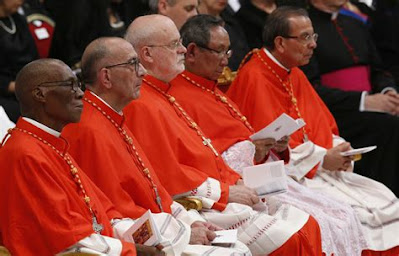
Sadly, a number of bishops and cardinals have recently contradicted the teachings of the Church on sexual immorality, saying that the Church’s teaching is no longer correct and the Church needs to move more with society. Since when did the Church ever change its teaching to please society? If the Scriptures are the word of God and the Church’s teachings are the teachings of God, then woe to anyone who changes them. Referring to teachings of sexual morality, St. Paul says, ‘Do you not know that the unjust (sexually immoral) will not inherit the kingdom of God. Do not let anyone deceive you.’ In the past, when any group did this, they ended up breaking away from the Church, just like the time of the Reformation, when Martin Luther objected to the teachings of the Church and eventually broke with Rome.

We must not compromise on the ways of God. Yes, it is more difficult, but if it is the truth then it is better to struggle with it than to try and change it to suit ourselves. The teachings of God don’t need to change; we are the ones who need to change.

The third temptation was to work signs and wonders for people. Satan taunted him, ‘Throw yourself down from the temple, since God will save you.’ If he started doing this, then no doubt he would have thousands of followers in no time. But Jesus also rejected this, because he knew that the way he had to take, was the way of service and the way of the cross, which would win people over heart by heart. You cannot buy love and that is why Jesus chose the humbler way and left it open to us to see what God offers us and then to freely choose to follow him or not.


Jesus was tempted to ‘bend the rules,’ to settle for less, but he resisted these temptations even though they must have really been tempting for him. We are continually presented with similar temptations; the temptation to reject the parts of our faith that don’t suit us: ‘Just take the easier parts, let others worry about the difficult parts’. But that is not what God asks us to do. There is a reason why they killed all the prophets, most of the Apostles and thousands of others throughout the centuries who preached the word of God, because people didn’t want to hear it. The Lord says, ‘If anyone wishes to be a follower of mine, let him renounce himself, take up his cross and follow me’ (Luke 9:23). It is not an easy path that leads us to God, but it is the most worthwhile path that there is. What could be more worthwhile than to follow the one path that will lead us to heaven, to total fulfillment?

Jesus says, ‘I am the Way’. ‘No one comes to the Father except through me.’ There are many other ‘lesser’ options, apparently easier ways, but they don’t lead to God. This is why Jesus was definite in his teaching. If you want to follow me, this is the path you must follow. It is the path of trying to live his teachings, even though we are continually hearing the voices that say, ‘It’s too difficult. It’s not realistic. You need to get with the times.’ We say we believe this teaching is from God and so the challenge is to be faithful to it, even if it doesn’t always suit me; even though I won’t always understand it.

Remember Jesus’ own words: ‘It is not everyone who says “Lord, Lord,” who will enter the kingdom of heaven, but those who do the will of my Father in heaven.’ (Matt 7:21)

In many ways I would still love it if God worked spectacular signs and wonders, so that people would be easily and quickly convinced, but that is not how God works and I think it is good to remember that, especially when we live in times of great change, when God often seems to be very quiet. The Lord knows what He is doing and He puts it to us continually to follow him freely.

Friday, February 25, 2022

8th Sunday Year C (Gospel: Luke 6:39-45) 'Why do you observe the splinter in your brother’s eye?'


The more scandals we hear about in our Church, the more disturbing it is. One thing I am glad of, is that people at the highest level in our Church have not been let off the hook. This is something that did not happen in the past. Thankfully we are getting beyond that. No one is above the law, or beyond conviction. Two cardinals have now been convicted of sexual abuse in the past and I’m glad they are being convicted, like anyone else. I have nothing against them personally, but no one should be above conviction, or just-punishment.


We are told not to judge. That has to be understood correctly. It is normal to judge a person’s actions. If someone murders another, it is morally wrong. If someone abuses another person, sexually, or in any other way, it is morally wrong and we can judge these things as right or wrong. The judgement we cannot make is the judgement of the heart. We cannot judge the heart of the person who did something like that, because only God can judge the heart. We don’t know what causes someone to act the way they do. I suspect that if we could see what goes on in the heart of each other, we would be a lot more merciful with one another.


‘Do not judge and you will not be judged. Do not condemn and you will not be condemned. Forgive and you will be forgiven.’ (Lk 6:37)


All of us are learning and hopefully will continue to learn until the day we die. This is God’s will for us, because the more we learn, the more we grow as people. The greatest learning we can do, is self-knowledge. The more we are able to look at ourselves honestly, the less likely we are to be over-critical of others. At the end of the day, if we are honest with ourselves, none of us is in a position to judge the heart of anyone else and yet we do it all the time. It is hard for us to distinguish between the actions of another and their heart. We tend to judge the person rather than their actions. If you turn it around, how would you feel if people only judged your heart, rather than by your actions. You know the way we do things and then are frustrated with ourselves, because we know we can do better, but our own weakness pulls us down.


In one of the parishes where I worked, an old lady went into a room for a meeting. In that room a carpenter was doing some work. She lost her temper with him and threatened to throw out his tools etc. Her reaction was completely out of proportion to what was going on. As it happened I turned up a few minutes later, but I realized she felt I was there to judge her. I knew that because the next time she came to me for Communion she had her head down; she wouldn’t look at me in the face. I felt the Lord saying to me, ‘You see the shame this woman feels because of her own weakness. Perhaps this is a temper she cannot control and it causes her great grief.’ It would be easy to write her off as a cantankerous old woman, without giving any consideration for the fact that maybe this is a weakness that she doesn’t have much control over and that causes her great humiliation. We cannot judge the heart.


‘Why do you notice the splinter in your brother's eye, but do not perceive the wooden beam in your own?’ The more self-knowledge we gain, the less we are likely to judge others, because we realize we have nothing to boast about. St. Thomas Aquinas says that the only thing we can take credit for are our sins. Maybe that seems a bit extreme, but think about it. Everything we have comes from God: our gifts, talents, opportunities, health, ability, intelligence, chance for education etc. To realize that also helps to bring humility, because humility is not pretending you are stupid when you know you aren’t, rather knowing what we are like before God. We are small and we are sinners, but that’s ok, because the Lord loves us as we are. The more aware of this we are, the less likely we are to only see what is wrong with the people around us. Unconsciously we tend to think that if we could sort out the people around us, the world would be ok and our life would be better. But what the Lord tells us is to focus on ourselves and then the world will start to become a better place.


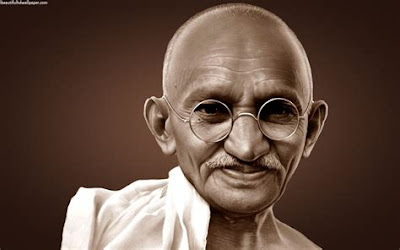
A woman once came with her son to the famous Gandhi, in India, who was revered as a wise and holy man. She asked him to tell her son to give up candy, as he was totally addicted to it. Gandhi told her to come back in three weeks. So she returned three weeks later. Then Gandhi said to her son, ‘You should give up all this candy, it is going to damage your health!’ The woman was puzzled and asked him why he hadn’t said that three weeks before. He told her that he was also addicted to candy, and so he had to give it up himself before he could tell her son to do it.


When I am in traffic and someone cuts me off, or does something that scares me, I usually react like most of us and get angry with the person, calling them all kinds of words that aren’t in the bible. But then I try to stop myself and ask myself if I have ever done anything similar? because of course I have. That usually gets me to calm down. The truth is that they are not the idiot that I just called them. They are someone who made an error in judgement. We all do it all the time. If we didn’t, there wouldn’t be any crashes on the road.


If I want the world to be a better place, I must start with myself, with my own repentance, acknowledging that I am as weak as anyone else, that I make mistakes like everyone else. Only then will the world begin to change. This is also where confession is a great help. When you go to confession regularly, you become more aware of your own faults and how you are before God, and that is how we grow in humility.


‘Why do you notice the splinter in your brother's eye, but do not perceive the wooden beam in your own?’


Saturday, February 19, 2022

7th Sunday Year C (Gospel: Luke 6:27-38) Love your enemies


Women YPG soldiers


 A few years ago I watched a BBC interview with some of the women fighters in Syria who fight with the YPG, or Kurdish coalition fighters. They are an all women group of soldiers fighting against ISIS in Northern Syria. The journalist was asking one of them how she felt about ISIS since they were killing her own people. Among other things that she mentioned, she said ‘We have to remember that they are people too.’ I was really surprised and impressed by this. This lady, although fighting this force of evil, was able to distinguish between the evil and the fact that they were also human beings. She had an inner sense of what is important and the value of each life. I’m sure those women didn’t want to be there, but they felt the need to be there to help protect their own people. ‘We have to remember that they are people too.’


Today’s readings address the very difficult teaching which says, ‘Love your enemies; pray for those who persecute you.’ I have never met anyone who wants to love their enemies. It doesn’t seem logical. But God doesn’t just ask us to be logical, but to see at a higher, or deeper level. That is where we remember that even those who attack us are also human beings, with their own problems. If we decide to hate them as they hate us, and to treat them as they are violent towards us, then we are no different from them. We are no better than them.


Does this mean that we are asked to let people walk all over us? Of course not. The challenge is to work for justice but not to give in to evil, rather, to resort to the inner strength that comes from our relationship with Jesus.


A few years back when I was travelling somewhere I ordered a car at the airport to bring me to my hotel as I thought it was a long distance. It turns out I didn’t need it, so I cancelled the car. Then to my annoyance I was charged for the car although I had been told I wouldn’t be. When I called the company to question the charge I was faced with a woman who was filled with venom and hatred like I have never met before. I came away from the phone call feeling quite shaken as she had been so vicious. The temptation for me was to just be angry with her and wish her a miserable day, but in the days that followed I felt the Lord saying to me that that woman needs prayer. So instead of remaining angry with her, I began to pray for her and have often prayed for her since. That was something the Lord taught me. It also made me think about the various situations I have been faced with—as we all have—where I have met real nastiness from people. Now I try to pray for them, after I have gotten over the initial reaction which is usually frustration and anger, often righteous anger, where I have been treated unfairly. But the Lord reminds me that maybe they are going through a hellish time in their own lives and that is what I am experiencing. If I didn’t believe in God I wouldn’t do that.


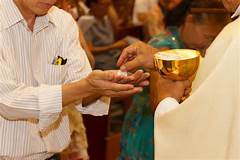
‘Love your enemies; pray for those who persecute you.’ That is an extremely hard thing to do, but we get the strength to at least attempt to respect others, from our relationship with the Lord. If we believe that God forgives us, in spite of our own failings, then we have an obligation to try and do the same. The strength we get to do that comes from the Eucharist. Every day, if we wish, we can receive the body and blood of Christ into our own bodies. We can listen to him speak to us. The more we come back to receive him and listen to him, the more we are given the inner strength to be different. That is one reason why the Lord gave us the Eucharist, so that we could rely on his strength to deal with every day difficulties. We are not being asked to rely purely on what we can do ourselves. This is what makes the difference between becoming filled with hatred ourselves, or remaining objective, seeking justice rather than revenge. We are living in a society which encourages us to take revenge, but that is not what God teaches us and we must decide who we are going to listen to.


One of the reasons why we are meant to be different as followers of Christ, is because we don’t believe in returning evil for evil, or seeking revenge for injustice. Instead we are called to remember that the people who hurt us are also human beings, with families and their own difficulties, even if individually they have turned to evil. We work for justice, but not for revenge. We strive for a better world, rather than one where we just wipe out our enemies. When we are on our death bed, which will be more important?


You probably remember the terrible attack in Paris in 2015, where gunmen went into a concert and opened fire, killing 129 people. Three days later the husband of one of the women murdered wrote this open letter, which really says everything. His name was Antoine Leiris. He had been married for 12 years.


Friday night, you took an exceptional life -- the love of my life, the mother of my son -- but you will not have my hatred I don't know who you are and I don't want to know, you are dead souls. If this God, for whom you kill blindly, made us in his image, every bullet in the body of my wife would have been one more wound in His heart.

So, no, I will not grant you the gift of my hatred. You're asking for it, but responding to hatred with anger is falling victim to the same ignorance that has made you what you are. You want me to be scared, to view my countrymen with mistrust, to sacrifice my liberty for my security. You lost.

I saw her this morning. Finally, after nights and days of waiting. She was just as beautiful as when she left on Friday night, just as beautiful as when I fell hopelessly in love over 12 years ago. Of course I am devastated by this pain, I give you this little victory, but the pain will be short-lived. I know that she will be with us every day and that we will find ourselves again in this paradise of free love to which you have no access.

We are just two, my son and me, but we are stronger than all the armies in the world. I don't have any more time to devote to you, I have to join Melvil who is waking up from his nap. He is barely 17-months-old. He will eat his meals as usual, and then we are going to play as usual, and for his whole life this little boy will threaten you by being happy and free. Because no, you will not have his hatred either.


‘Love your enemies.  Pray for those who persecute you.’


Saturday, February 12, 2022

6th Sunday, Year C (Gospel: Luke: 6:17, 20-26) Male and female He created them


 I couldn’t help thinking that the first line of the first reading is so apt for today. ‘Cursed be the person who puts their trust in people, who seeks his strength in flesh, whose heart turns away from the Lord.’

‘Blessed is the one whose hope is in the Lord. He is like a tree planted beside the waters... In the year of drought it shows no distress.’


Anywhere on earth where a government has decided to create a utopia, or heaven on earth, without God, they have ended up creating hell on earth, such as Nazi Germany and Communism. If we take God out of the picture, then our dignity disappears, since we get our dignity from being created in God’s image. ‘Let us make man in our own image, after our likeness… So God created man in his own image. In the image of God He created him. Male and female He created them.’ (Gen 1:26-27). If God is not part of the picture, then we are just servants of the state, as opposed to children of God. The wonder of our being created, is that God deliberately created us in his own image, with reason and free will and an immortal soul. Everyone in this building will live forever, either with God in heaven, or without God in hell. There is no in-between.


Just after Thanksgiving we had our convocation, which is when all of the priests of the diocese get together for a few days, to pray, socialize and for further education. I always enjoy being able to spend a bit of time with the other priests, as it is really the only time of the year we get together for more than an hour. I think the other priests feel the same as there is always a very good turnout.


The diocese also gets one or two speakers to give talks each day. This year the whole convocation was addressing the LGBTQ and transgender issues and how best to address it. I have to say it was the most intense and disturbing conference I was ever at. I was quite exhausted by the end of it.


We had two speakers. The first was a lady by the name of Mary Hasson, an attorney specializing in ethics, who has represented the Vatican to the UN. The other speaker was a deacon and plastic surgeon by the name of Patrick Lappert, both very high-powered people with extraordinary careers.


It was much too long to go into any details, but there are one or two issues that I think it is really important that you are aware of, especially parents with teen and pre-adolescent children.


In the last few years there has been a 5000% increase in transgender diagnosis among females. Historically it was almost exclusively males and at that only 0.02%. So why is this?


The reason is not that we have suddenly become enlightened, which every generation seems to believe it is. The reason is largely because these ideas are being suggested to children, pre-adolescents and teens and are also being encouraged and groomed. This is happening in high-schools all over the country at this time and it is being done without parents knowledge. Discussions in classrooms are taking the form of bringing up questions about your gender and whether you feel at home in your own male/female body. IF you don’t feel comfortable, maybe you are not meant to be a boy/girl. So maybe you should starting looking at why you aren’t a girl and how you can become one. For boys, if your best friends are only other boys, then maybe you are gay and you should embrace that. The biggest difficulty is that this is being done without parents knowing. They are told that this is a matter of privacy which is not parents’ business and then parents often begin to discover what is going on when a lot of damage has already been done. The news is full of articles about these cases right now. You may well have read some of them.


Here is one example which I read this week. On Jan 24th, in Clay County, Florida, a lawsuit was filed against a school where a 12 year old girl had attempted suicide, twice in two days. Only after the second attempt were the parents called into the school. When they asked what was going on, they were told that this had happened because of their daughter’s gender identity crisis. For months the child had been having private meetings with the school counsellor about her gender identity crisis, which she had never had up to that point. The counsellor and staff had gone so far as to give the girl a boys name and refer to her publicly by this name. This had led to a lot of bullying and the child had become so distressed she ended up trying to take her own life. All of this was done without the parents knowledge, because they believed the parents would not be in agreement on account of their Christian beliefs.


If an adult decides that they want to change their sexual identity, that is their own business. But to be suggesting this to children and encouraging them, is evil, because they are at a very impressionable age. Does it bring peace and joy to the child? No. For the most part it causes great anxiety and distress. It is evil. If something is good and of God, it will bring peace and joy. This is the exact opposite.


The Child and Parental Rights Campaign, which is a non-profit law firm set up to defend parents’ rights to shield their children from the impact of gender identity ideology, say that they are being completely overwhelmed with phone calls for help, from parents all over the country.


The reason I wanted to talk about this is because all of you parents who have teen and pre-adolescent children, need to be aware that this is going on and it will be done without your knowledge, so talk to your children and make sure that if this does come up, they talk to you about it.


God’s creation has an order to it and that order works. One of the first things it shows in the creation account in Genesis, is that the Spirit put order on the chaos that was there. God created man and woman in his image. Male and female He created them. God knew what He was doing and as long as we continue to listen to God’s word and live by the order that He shows us, we will have the right foundation to get through all the craziness that is going on around us. But we must stand by our beliefs. The teachings of Scripture either come from God or they don’t. If they are from God, then we need to listen. If they are not from God then why are we here?


The foundations of our faith are under attack at the moment. We shouldn’t be afraid of that, because the Lord always helps those who try and be faithful to him, but we must be faithful to him and not give in to teachings which go directly against the word of God.


‘Blessed is the one whose hope is in the Lord. He is like a tree planted beside the waters... In the year of drought it shows no distress.’