Sunday, January 30, 2022

4th Sunday Year C, (Gospel: Luke 4:21-30) Love conquers all


I heard a story about a priest who was going to stay for a weekend with his niece and her partner.  It was a little awkward because they were both into occult practice and he was a priest.  They also knew he knew they were into this.  But for the couple of days that he was with them he never once mentioned a word about it, or made any remarks or comments.  Instead he was just very loving towards them and showed great respect for them.  They were so moved by this that it actually brought about their conversion.


Frank Duff, the man who founded the Legion of Mary, had this saying: ‘Win an argument, lose a soul.’ Arguments don’t win people over; love does.


Today’s readings present us with two things.  First of all, the prophet, or the person who speaks the word of God, the message of God, is going to meet opposition.  While that applies especially to the one who has to preach it, it also applies to all of us who try to live it.  As you know it is ‘acceptable’ to be just about anything except Catholic at the moment.  We are in the minority now and the Lord is putting it to us to try and be faithful in the midst of so much opposition.  In the first reading God says to the prophet:

Brace yourself for action… Do not be dismayed in their presence… I will make you into a pillar of iron and a wall of bronze to confront all this land (Jer 1:17-18)


The Lord continues to say the same to us.  ‘Don’t be afraid because people are opposed to you, or to your way of life, or what you believe in. Instead, stand your ground.’ 

They will fight against you but shall not overcome you, for I am with you to deliver you—it is the Lord who speaks (Jer 1:19).


It is a big temptation for us to take what might seem like an easier option, or just to take the bits of our faith that suit us. After all, that can seem much more ‘reasonable’. This is 2022 after all. However, that is not what the Lord tells us to do. The Lord tells us to try and be faithful to his word, because that is the path that leads to life. That is the path that will bring us to fulfilment more than anything else. Following the way of his teachings is not easy, but it is completely worthwhile.


From the beginning of his preaching Jesus met continued opposition. In today’s Gospel we read how in a matter of minutes the people went from admiring the beautiful words that came out of his mouth, to trying to kill him. Another time when the apostles came and told him that everyone was looking for him because they wanted to hear him, he said, ‘Let us go elsewhere to the neighbouring towns.’ He knew what he had to do and whether he was popular or not, he just kept going about what the Father in heaven had sent him to do.


The Lord is telling us something through all this. He is calling us to be faithful. Yes we are in the minority and yes there is plenty of opposition, but it doesn’t matter. God has given us something extraordinary in his teaching and although we are free to take it or leave it we will never find anything else that could compare to his teaching. 


The second thing that we are presented with in today’s readings is the call to love. Nothing is as important as this. Love is patient, kind, gentle, tolerant. This is how we are called to live. We will say more to the people around us by the way we live than by any arguments we could make. In the beginning the Christians were a small group and people were very suspicious of them. But it was the witness of their lives that convinced others as to what they were about. People were amazed at how they loved each other and how they tried to live. The same holds for us.


Parents who have adult children who no longer practice their faith often ask me what is the best thing to do. I think the best thing is to love them, respect them and try not to judge them. They know what you believe, even if they don’t agree with it. Your fidelity to what you believe speaks to them more than you realize. If we continue to quietly practice our faith and love and be patient with the people around us, we will tell people about what we believe without saying a word. And if people mock you, sometimes family members, don’t be afraid to tell them that you respect what they do or don’t believe, and they should respect your faith too, whether they agree with it or not.

In one of his famous speeches, Martin Luther King said something very similar:

To our bitterest opponents we say: We shall match your capacity to inflict suffering by our capacity to endure suffering. We shall meet your physical force with soul force. Do to us what you will, we shall continue to love you… Throw us in jail, we shall still love you. Send your hooded perpetrators of violence into our community at the midnight hour and beat us and leave us half-dead and we shall still love you. One day we will win freedom, but not only for ourselves. We shall so appeal to your heart and conscience that we shall win you in the process. (Martin Luther King, Strength to Love)


The ‘secret’ to be able to live this way, is for us to root ourselves in God, because it is only through our relationship to God that we receive the ability to love those around us; to be tolerant with those who are different to us, or who directly oppose us. That is why we keep coming back to pray together, to listen to God’s word to receive Jesus in the Eucharist. In Jesus is our strength. If we try to live the way of Christianity by our own strength we will quickly fail. The Lord doesn’t expect us to live it by our own strength and neither should we. That is what Pentecost was all about. Jesus gave the Apostles the gift of his Spirit, so that they would have the strength to live their faith and to preach his word in the face of opposition. Our strength comes from staying close to him.


In the end there are three things that last: faith, hope and love and the greatest of these is love (1 Cor 13:13)


Friday, January 21, 2022

3rd Sunday, Year C (Luke 1:1-4; 4:14-21) The Spirit of the Lord has been given to me


A few years ago a Dominican priest friend of mine told me the following story. He was based in Dublin, and because of renovations to their church, they were using a make-shift chapel at the time, which was a bit cramped. The chapel was jammed as they were celebrating the Easter Vigil and he said that the reader was reading the account of creation in Genesis in a rather posh accent. While he was reading this piece of Scripture a homeless man came up to the top of the chapel and sat down right underneath where the man was reading and listened to the reading. When he got to the part of the reading that says, ‘God saw all that He had made and indeed it was very good,’ the homeless man said out loud, ‘You’re havin’ me on!’ (You’ve got to be kiddin’). The reader continued to the next part and again when he got where it says ‘...and indeed it was very good’, again the homeless man said out loud ‘You’re having me on!’  While it might have seemed very ignorant of the man to interrupt the reading like this, what he was saying was that this might be what the scriptures say, but it certainly wasn’t his experience of the world.

How do we make sense of a reading like today’s Gospel which says that Jesus, the anointed one of God, came to bring ‘good news’ to the poor, to free prisoners, etc?  For many people, such as that homeless man and indeed many others too, their experience of the world is that it is a difficult place where often things don’t work out. Think of the families who are living in the middle of war at this time, or even those who are really struggling to survive in our own country, veterans on the streets. What could possibly be ‘good news’ for them?

The ‘good news’ that the Son of God came to tell us is that there is a purpose to our lives. We are here for a reason. Our lives are not meaningless and the meaning of our lives does not depend on how ‘successful,’ or otherwise, things seem to be for us in this world. How well we do on the outside is not really that important. What is primary is what happens inside us, in the heart. God has created us to love and to serve and to blossom as people. Hopefully we will also do well on the outside and be able to provide for our loved ones and enjoy this life too, but whether or not everything works out well for us is really secondary. The only thing that really matters is that we realise what the purpose of our life is about—to love God and the people around us. This is something that everyone can do, no matter what their circumstances.


I used to visit a man in prison over two years, while I was studying to be a priest. He was in for a very serious crime and he was doing a life sentence. As far as I know he is still in prison. Having got to know him, I also realised that he was basically a very good man himself. The crime he committed, which was a murder, was one of these bizarre things that happened, where 30 seconds either way and he would never have met the person he killed. He was provoked, there was a fight and he ended up killing the other person. Now his life is apparently ruined and he will spend most of it in prison. Does this mean that his life is meaningless, or a total failure? Not necessarily so; it depends on what goes on inside him more than anything else, because that is what God sees and that is what God will judge him by. That is what God will judge all of us by: how we have loved. Whether we end up living on the street or being the president of some huge company, is really not that important. Of course we should try to make the most of the opportunities that we are given and strive to succeed and hopefully we will do well, but if we can see that the purpose of our lives is much deeper than just what we achieve on the outside, in the world’s eyes, then we will have an inner strength that will help us keep going, no matter what happens.

This ‘good news’ that Jesus mentions in the Gospel, is that we are loved, we are deliberately created by God, we are valued, that there is a purpose to our lives and because of the death and resurrection of Jesus, heaven also awaits us when our time on earth is complete. We are not just here by chance. God deliberately created us. God wants us here at this particular time in history, in the particular family that we are part of. If I cannot see this bigger picture then my life may appear to be meaningless, especially if things haven’t worked out the way I think they should have. But that is to limit my purpose to my own very limited way of seeing the world. If I try to see it with the eyes of faith, then I will see something quite different. To understand that is to give sight to the blind and freedom to those who are imprisoned. It’s not just prisons like ‘Mountjoy’ in Dublin where my friend was either, but the kind of prison of the mind that tells me that my life is a waste of time. No one’s life is a waste of time if we realise that God wants us here. Our job here is primarily to love and serve God and the people around us. The key for us is to see the bigger picture.

I heard a line from the series Downton Abbey, where one of the main characters, Lord Crawley, is talking to his son. His son has moved out on his own and is refusing to let his butler do his job. He feels that he doesn’t need a butler. But eventually his father says to him, ‘Everyone has a part to play and everyone must be allowed to play their part.’ The son realizes his mistake and begins to allow the butler do his job, so that he can fulfil his purpose too.


This is also what the second reading is talking about. All of us have a role to play and no one else can play that role. It may not seem terribly exciting, but it is the role that God has given us and therefore it is important. We will affect the people around us in a way that no one else can, because all of us bring our own unique gifts.

People often ask me how they will know what God wants them to do. If they have a specific role, or mission, how will they know what it is. If God has a specific mission for you, it will become obvious, but for most of us it is to blossom where we are planted. It may not seem to be a very exciting role, but it is the role that God has given us and it is important, because it is the role that God has given us.

If the Lord appeared to you and asked you if you would be willing to fulfil a particular mission for him, you would probably say, ‘of course.’ Then if He explained that the mission was to continue as you are, to love the people around you as best you can, and to continue to pray for them, would you say ‘no’? You may find yourself wondering why He would ask you to do something so mundane, but if this is what the Lord is asking you to do, then that is what He wants you to do and it is important, because no one else will do it in the way you can, because all of us are unique.

‘All of us have a part to play and all of us must be allowed to play our part.’


Saturday, January 15, 2022

2nd Sunday, Year C (Gospel: John 2: 1-11) The Lord delights in you


I remember one time in the seminary, during the Sunday mass, which was a public mass, the cantor started singing the Creed, instead of the Gloria. He would sing the first line by himself and then the choir would join in, so when He started singing the creed first, it threw everyone off and He had to start again. No big deal, except that He was embarrassed, but I remember him saying to me later, ‘Of all the good singing I did Here, the only thing people will remember is when I started the Creed instead of the Gloria’ and He was right!


Another time at a funeral at Epiphany Cathedral, we were using the social hall, as there was work going on in the cathedral. In the middle of the mass, when the sacristan came out with the incense, it was really burning with a huge amount of smoke. Needless to mention it set off the fire alarm and the fire alarm was not easily turned off. So we couldn’t continue until we got all the doors open, the smoke cleared and finally the alarm off. And then we could Hear the fire trucks approaching. Not what you want to happen at your loved one’s funeral, although the family saw the lighter side of it.


We don’t want important events in our life to be remembered for the wrong reason. Can you imagine how embarrassing it would be if at your wedding, or your daughter or son’s wedding, they ran out of alcohol? You would be so embarrassed and ashamed, publicly humiliated. You would not want your wedding to be remembered for that.


Jewish weddings at the time of Jesus went on for about a week, usually after harvest time, when people were freer to relax and lest concerned about things. It was also a village event. As you know, the worst thing happened and they ran out of wine, which would also have been the primary drink.


Mary notices and intercedes for them, making it known to Jesus. Jesus objects, because it is not his time. He doesn’t want to start his public ministry just yet, but at Her request He does. What is beautiful about Jesus’ intervention is the generosity with which He worked this miracle. Six jars that hold 20-30 gallons, would be about 1000 bottles of wine. Jesus doesn’t just fix the problem, but He does so with great generosity, more than you could ask for. This was deliberate, both for them and for us, to remind us that God doesn’t just want to give us the minimum, but the maximum. He wants our happiness. It also shows us that God is interested in the ordinary everyday things we do, not just the spiritual things.


In the first reading it says, ‘The Lord delights in you.’ Jesus delights in us, not just observes and tolerates us. I think many of us often feel inadequate before God and in one way we are. There is an infinite distance between our sinfulness and God’s holiness. It is understandable how we can see God as observing us and weighing whether we are good enough or not, but the word of God tells us something different. If you look at the many images of how God sees us in the Bible, they are all beautiful.

‘Even if a mother forget Her child, I will never forget you. I have carved you on the palms of my hand’ (Is 49:15-16). Another image is how a bride and groom see each other. The Song of Songs are poems about a couple in love and their passionate love for each other. Lovers only see the good in each other and that is how the Lord sees us.


If you think of how Jesus dealt with all the different people He met. He always loved them and showed compassion for them, many of whose lives were a total failure in the eyes of the world, but He does not see that. God sees the goodness in us.


‘God did not send his Son to condemn the world, but to save it’ (Jn 3:17).


The wedding at Cana is also a reminder of the importance of Mary’s role of intercession. In St. John’s Gospel, John spells this out. At the crucifixion he writes,

When Jesus saw his mother and the disciple whom He loved standing by, He said, “Woman, behold your son.” Then He said to the disciple, “Son, behold your mother”. And from that moment on his disciple took Her into his home (Jn 19:26-27).


John the Apostle is considered the model disciple. In other words, He represents what we are called to be. So when Jesus said this, He was entrusting his mother to us and us to his mother. Our Lady has been given to us as our mother. She is the mother of God and the mother of all of us, who continually intercedes for us. What request of Mary would be refused by God? That is why we continually ask Mary to intercede for us before God and she does, because God has given her this role.


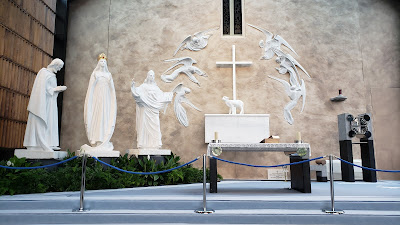
It is interesting that everywhere Our Lady has appeared on earth, she is always pointing us to Jesus. It is never about Her. She is always telling us to return to Jesus, to the mass, to confession, to prayer and fasting, reminding us that we cannot live without God. We are nothing without God and our life is meaningless without God. Just like at the wedding at Cana, she asked Jesus to Help the couple. It was not about her and it is the same today. We honor her because of the extraordinary role that God gave to Her. We do not worship her, because that would be idolatry, but we give her honor, just as Jesus did and we are called to imitate Jesus.


Finally, remember the words that Mary said to the servants, when she knew that Jesus was going to come to the aid of the couple: ‘Do whatever He tells you.’ Mary is saying the same to us today: ‘Do whatever He tells you.’ (Jn 2:5)


Monday, January 10, 2022

The Baptism of the Lord (Gospel: Luke 3:15-16, 21-22)


Peter said to the people, ‘In truth I see that God shows no partiality. Rather in every nation, whoever fears him and acts uprightly is acceptable to him.’ (Acts 10:34-35).


Cultural differences are interesting. What is acceptable to us, can be totally unacceptable in other cultures. When I was living in Rome, I learnt that in Italy the people will be very conscious of how much you drink as a priest. In a restaurant they will count every drink you have. In Ireland people don’t think about it and in fact will be quite tolerant, even if the priest has a drink problem. Complete opposites.


In the second reading today St. Peter says he realised how anyone can be acceptable to God if they do what is right. That might seem obvious enough to us, but it wasn’t obvious to them at that time. The Jewish people believed that they were specially chosen by God, which they were and that meant anyone else who was not Jewish was not so important to God. But then the Lord began to teach the Apostles that He was there for everyone, of every nationality and creed. It took them a while to come around to this way of thinking. In fact the first few times some Gentiles (non-Jews) received the gift of the Spirit, the Apostles were quite surprised. They hadn’t expected this. They didn’t think that Gentiles would be given the gift of the Spirit. God was helping them to gradually broaden their horizons. Everyone, of every nationality and creed was being called into God’s family. The Lord showed this to St. Peter through a vision (See Acts 10:9-16). Peter saw a vision of a great sheet being let down from heaven filled with all kinds of animals and birds. Then he heard a voice saying:

“Now Peter, Kill and eat!” But Peter answered, “Certainly not, Lord; I have never yet eaten anything profane or unclean.” Again, a second time, the voice spoke to him, “What God has made clean, you have no right to call profane”. This was repeated three times and suddenly the container was drawn up to heaven again (Acts 10:13-16).


This vision helped Peter to understand that no-one was ‘unclean’ in God’s sight, if they tried to live the right way. The Lord was helping Peter to see a bigger picture, but as with most of us, this happens gradually. Everyone is called to be part of God’s family and all are welcome, however, that doesn’t mean that anything goes. There is a thinking today that everyone should be welcome in the Church and should be able to continue their life-style, whether it is in accordance with God’s teaching or not. That is not what we believe. The Apostles preached faith in Jesus Christ and repentance for sin. Jesus’ first words in his preaching were, “Repent, for the Kingdom of God is at hand” (Matt 4:17). Christ died for our sins and we are called to be in relationship with him, but we are also called to repent of sinful ways of living, ways which are not in accord with God’s teaching. Our culture is demanding that we accept everyone’s lifestyle, regardless of whether it is sinful or not. That is not what Christ preached. Immoral sexual behaviour is not acceptable to God and the Apostles were very strong in their preaching about this. Listen to what St. Paul wrote:

‘Of this you can be sure: no immoral, impure or greedy person (that is an idolater) has any inheritance in the kingdom of Christ and of God’ (Eph 5:5).


‘The acts of the flesh are obvious, sexual immorality, impurity and debauchery; idolatry and sorcery, hatred and discord, envy, drunkenness, orgies and the like. I warn you as I did before, no one who practices such things will enter the kingdom of God’ (Gal 5:19-21).


That means that sexual sins are serious and we must repent of them ourselves and encourage others to do the same: homosexual sin, heterosexual sin, sexual sin outside of marriage (fornication), pornography and every other kind of impurity. All of these are offensive to God. ‘Oh, but we might offend people if we say anything.’ Is it better to warn people of the possibility of losing eternal life with God because of sin, or to be quiet in case we offend them? because that is what it comes down to. Jesus’ own words: ‘It is not those who say to me, “Lord, Lord”, who will enter the kingdom of heaven, but those who do the will of my Father in heaven’ (Matt &:21). You often hear people say, “I love God and I’m a good person.” That’s nice, but am I doing the will of the Father in heaven? because that’s what matters.


It is interesting that one of the things that attracted people to Christianity at the beginning, was their way of life, which didn’t allow every kind of immoral behaviour and sexual deviance, because the Christians understood that we have a higher calling from God, that shows us that our bodies are not meant for any kind of behaviour, but a life of purity, which recognizes the dignity that God has given us. The Roman Empire was morally bankrupt, very similar to our society today and as a result it destroyed itself. People were drawn to Christianity because they didn’t want to accept this way of life. Instinctively people knew this wasn’t right, because the Spirit teaches us what is right.


Fatima, Portugal


In 1917 Our Lady told the three children in Fatima that the current war, which was WWI, would soon end, but that if there wasn’t repentance a worse war would follow. It seems there wasn’t repentance and the Second World War followed. In WWI it is estimated that about 20 million people died. In WWII it is estimated that about 50 million people died, because there wasn’t repentance for sin. That is how serious sin is. People are inclined to say that God would never punish us, but that’s not what is in the Scriptures. Many times the world, or different places, became so sinful in their behaviour, that God wiped them out. It is God’s world, not ours. We are God’s creation, not our own and we are accountable for what we do.


Everyone struggles with sin. That is normal and God assures us of his forgiveness and mercy if we repent, so we should never be afraid of our own weaknesses and struggles. But to persist in a lifestyle that is contrary to God’s teaching and then expect God’s love and mercy is naïve and it is not what the word of God says. Everyone is welcome in the Church, but not everything goes. Our culture is demanding that we accept everyone and their lifestyle, even if it is immoral. That is not what the word of God teaches and we have to resist it and we will be despised for it and called bigots and small-minded, but it won’t be the first time.


After Jesus was Baptised in the Jordan a vision was seen of the Spirit coming down on him in the form of a dove. The Father in heaven was empowering him with the gift of the Spirit, to enable him to live the mission that the Father had given him, to teach the people about God and to offer himself for the sins of the world. The Spirit gave him the strength and wisdom He needed for this difficult mission. 


When we are baptised we receive God’s grace and the gift of the Spirit to enable us to live the Christian life. The path to God is not a way of life that we can easily live by our own strength. It is difficult, but that is why God gives us the gift of his Spirit to help us.


When we are baptised, we state what it is we believe and we commit ourselves to this way of faith. If you were baptised as a child, someone else will have spoken on your behalf, but they do this on condition that they will pass on the faith as we grow up, otherwise it would be hypocrisy. If someone comes for baptism as an adult, they must go through a time of learning about our faith, which we call the Rite of Christian Initiation of Adults (RCIA). We have three people in this parish doing it this year and they will be fully accepted into the Church at Easter. Only when they understand it properly will they be baptised. At Baptism we receive the gift of the Holy Spirit to strengthen us and help us live the life that God calls us to. This is later strengthened through the gift of the Spirit at Confirmation, which is what Pentecost was. The Lord is aware that what He calls us to is not easy, but He also gives us all the help we need to live this way of life.


‘In truth I see that God shows no partiality. Rather in every nation, whoever fears him and acts uprightly is acceptable to him.’ (Acts 10:34-35).


Friday, December 24, 2021

Christmas. 'The Word was made flesh and dwelt among us.'


 On Thursday (23rd Dec) I got a call from the diocese asking me if I would be willing to let WINK News interview me. They were doing a short report, interviewing different religious leaders about Christmas. The reporter asked me what message I would like to give people about Christmas. I was thinking, the message we have is the greatest and most hopeful message there has ever been, because it is the message that everyone wants to hear, that is, where to find happiness.


Everyone in the world is looking for happiness. We may have very different ideas as to what happiness is, but everyone wants happiness. And the wonderful thing is that God created us for happiness. That was God’s design for us and initially we had total happiness. That is presented to us through the story of Adam and Eve, who represent our first parents. God gave them everything they could ask for and they were completely happy. But God also warned them to respect their limitations and remember that they were humans and not God. That’s what the tree of the knowledge of good and evil represents.

“You may eat freely from every tree of the garden, but you must not eat from the tree of the knowledge of good and evil. For on the day that you eat of it you will surely die” (Gen 2:16-17).


Only God tells us what is ultimately good and evil. If they had listened to what God told them, they would have continued to enjoy that happiness.


But Satan tempted them with a lie. He told them that they would not die, that in fact they would be like God themselves. Why would Satan even bother with us, since he is such a powerful being? Because he hates God and he hates God’s creation, especially us because we are made in the image of God. If Satan isn’t real, then Jesus lied, because Jesus spoke about him many times. Jesus said he was a liar and a murdered from the beginning.


So instead of listening to God, Adam and Eve listened to Satan. They rejected the word of God, the guidance of God and as a result, they lost the happiness that God had given them. Chaos entered their world, because they did not listen to God. The biggest problem was that they had no way of undoing the damage they had done. But because God loves us He would not allow his creation to fall to ruin. And so God the Son took on human flesh and came among us in the person of Jesus, to rescue us and this is what we celebrate at Christmas, the beginning of the great rescue. God came to offer himself in atonement for our sin, so that we could once again have that happiness. This event began at Christmas and ended 33 years later at Easter with the death and resurrection of Jesus. The sacrifice of Jesus atoned for the sin of Adam and Eve, which affected all of us. So now, the possibility of eternal happiness is there once again and God offers it to us and we have the freedom to accept or reject it.


So Christmas is celebrating the beginning of the great rescue of humanity, so that we could have happiness, which is what everyone is looking for. No wonder there were extraordinary signs at the time of Christ’s birth. Angels appeared to shepherds and different people were led to where Jesus had been born. Even the name Jesus, means, ‘Who Saves’. That’s why the Angel Gabriel said to Joseph, ‘And you must name him Jesus, for He will save his people from their sins’ (Mt 1:21).


In practical terms it means that all of our loved ones who have gone before us, can be with God in eternal happiness, which is what God intended for us in the first place. But the amazing thing is that we can reject God, because has given us that freedom. God will not force anything on us, because He respects the free will that He has given us. You cannot force someone to love you and neither will God force us to love him. So we must choose for God and we do that by choosing to live as He asks and that comes down to how we live each day.


When Our Lady appeared to St. Bernadette in Lourdes in 1858, she said to her, ‘I cannot promise you happiness in this life, but in the next.’ If we realized that we will not have full happiness in this life, but in the next, we would probably be much more at peace. But if we put all our energies into trying to find complete happiness here, we will be disappointed. We will hopefully find a certain amount of contentment and times of great happiness, but complete fulfillment is only for the world to come.


The chaos that is all around us in our world right now, is because people are doing exactly what Adam and Eve did. They have rejected God and refuse to listen to God’s word. And so what is happening is exactly what God told us would happen: chaos follows. The very answer that people are looking for, is the very thing people have turned their back on. God shows us exactly how to live, so that our lives and our world will flourish. All we have to do is follow what He commands us, but just like Adam and Eve, we are not convinced and we turn in the other direction. The answer for our world is to turn back to God once again.


In the second book of Chronicles 7:14, it says:

“If my people who are called by my name, will humble themselves and pray and seek my face and turn from their wicked ways, then I will hear from heaven and forgive their sin and heal their land.”


Throughout history, people have done the same thing again and again, rejecting God and then watching their world fall apart. It is only when they turned back to God that everything begins to fit together again. This is what the Lord is calling us to do right now: to turn back to him and ask his forgiveness.


The wonderful thing is that God wants our happiness and has gone to the ends of the earth to make sure we can have eternal happiness. All we have to do is listen to what He tells us to do.


Think of someone you love who has died. We long to be with them again and the pain is often unbearable. What God offers us is the possibility of being with them again, where we will no longer suffer and we will only have joy. That is what God wanted for us in the first place and that now awaits us if we choose it, but we must choose it.


In 1917 in Fatima, Our Lady appeared to three young children: Jacinta, Francisco and Lucia, who were 7, 9 and 10. One of the things she said to them was, “If people knew what heaven was like, they would do everything to change their ways.” Why do you think Our Lady has continued to appear all over the world over the last century in particular? To tell us to wake up, so that we don’t lose this possibility, because we can lose it if we are not careful how we live. If we continually reject the ways of God we will lose it and then we will not be with our loved ones again. That is why our choices are so serious.


So, the message of Christmas is the most wonderful and hopeful one of all. This is the answer everyone is looking for and we have already come to know it.


The angel said to the shepherds: “Do not be afraid. I bring you good news of great joy, which will be for all the people. Today in the city of David a Savior has been born for you. He is Christ the Lord.”


Saturday, December 18, 2021

4th Sunday of Advent (Gospel: Luke 1:39-45) Blessed is she who believed


In the Bible there are many characters who were called ‘blessed’ because of their faith.  Abraham was told that he would have a child when he was almost 100 years old and his wife Sarah was in her 90s. Scientifically it couldn’t have happened, but he believed and it did happen and God blessed him on account of his faith.


Zachariah was told his wife Elizabeth would have a baby, John the Baptist, even though she had been barren all her life and was now an old woman. When the angel Gabriel told Zachariah this, he found it hard to believe and he said so to the angel. ‘How can I know that this will happen?’ The angel Gabriel wasn’t too impressed and said, ‘I am Gabriel who stand before God. Since you have not believed me, here is a sign for you. You will be struck dumb until the time comes for this to happen.’ And he was struck dumb until after the baby was born. So even though he doubted, it still happened. So, if the angel Gabriel tells you something is going to happen, don’t doubt it or you may be struck dumb!


The angel Gabriel appeared to Mary and told her that she would have a child, but not by human means. She believed, even though she didn’t understand and it happened. The angel also reminded her that ‘nothing is impossible to God.’ 


All of these people and many others too, were told to believe, even though it didn’t make any sense to them. They believed even though they didn't understand. When Mary visited Elizabeth, Elizabeth said to her, ‘Blessed is she who believed that the promises made her by the Lord would be fulfilled.’ I wonder would many of these things have happened if the people involved had refused to believe until they were sure, until they were able to know these things were true; until they were proven?


God asks us to believe what He reveals to us, because it is from him and God only speaks truth. God asks us to believe that the bread and wine really and truly become the body and blood of Jesus at the consecration of each mass and they do. They do because it was Jesus who said it and throughout the centuries Jesus continues to give us Eucharistic miracles to help us to believe; over one hundred to date.


God asks us to believe that our sins are forgiven in confession, when the priest says the words, ‘I absolve you from your sins, in the name of the Father and of the Son and of the Holy Spirit.’ He asks us to believe this because He is the one who tells us that this is what happens through his priests. We don’t understand these things, but we believe them and that is what faith is. I don’t understand, but I believe, because a it is God who has revealed these things to us and He asks us to believe them on his authority.


At times like these, when there is so much upheaval in our Church and in our world, it can be difficult to believe. God seems to have abandoned us, or we find ourselves asking, why are all these things happening? However, the Lord is with us and always will be. Earthly structures will change and even collapse, because they are only earthly structures. That is really what we are seeing: earthly and human structures changing. Even the earthly side of God’s Church will change and may even seem to collapse, but the Lord remains with us as always. ‘The light shines in the darkness and the darkness cannot overcome it’ (Jn 1:5).


The mercy of God allows his Church to be purified and his world to be purified and this is part of what we see happening. Throughout history the same thing happened again and again, when people turned away from God. And sometimes it took the collapse of everything to make people turn back to God. The Scriptures show this same cycle again and again. When the people of Israel turned away from God, their society began to collapse and sooner or later their enemies overcame them. Eventually they began to see that they had brought about their own ruin and they repented. For some reason we never seem to learn from history and we do the same thing over and over.


The more chaotic our world is, the more important it is to focus on Jesus. Instead of being filled with the news—so much of which is untrue—we need to be filled with what God says. Read the Scriptures every day. Worldly news will not bring you peace, wisdom and guidance. The word of God will. Read at least one chapter of the Bible, especially the New Testament, every day. It takes about five minutes.


I think a good thing to focus on now right now is the mystery of Christmas in its simplicity. God visits his people in the form of a totally helpless newborn baby. Angels appear in the sky to announce this strange event, but they don’t announce it to the great people of the time, they announce it to the poorest of the poor who are looking after the animals in the fields. The king goes mad out of jealousy and fear and tries to have the baby killed. All these things may seem almost like a fairy-tale, from a human point of view, but they are real. They really happened. If it was just a story, it would never have changed the course of history. Christmas has become a semi-pagan feast. So many people celebrate having no sense of what it is about. It is just a feast where we exchange presents and are supposed to be kind to one another. We know it is about God coming among us, to rescue us and that is the thing to focus on. God comes to us in the chaos of our world.


The people of Israel represent the people of God everywhere. The name itself means, ‘Wrestles with God.’ It comes from a strange encounter Jacob (Abraham, Isaac and Jacob) had with an angel who came to him and wrestled with him all night. By dawn the angel was not able to get the better of him and the angel said to him, ‘From now on your name shall no longer be Jacob, but Israel, because you wrestled with God and have overcome.’ (Gen 22:24-28). That tells us something. Part of what faith entails is that we will struggle, wrestle, with God. We often won’t understand and we will at times get angry, but this is part of the journey of faith.


In this mass, in a few minutes, God will become present to us in a tiny piece of bread we call the Eucharist, or Holy Communion. How can this be? Many people consider such an idea ridiculous, even some Catholics. But we believe it because it is the Lord who has told us these things. There is so much that we don’t understand, but God has never asked us to understand, only to believe them, because He has made them known to us. The Lord has promised us that He will always be with us to guide us, and He has also promised us that the darkness cannot overcome the light. If we believe that, then there is nothing for us to be afraid of. What we need to be attentive to, is that we are focusing on the right thing; not the chaos of the world, but on Jesus.


‘Blessed is she who believed the promises made her by the Lord would be fulfilled.’


Friday, December 10, 2021

3rd Sunday of Advent. Forgiveness and repentance (Gospel; Luke 3:10-18)


Every time I celebrate the mass there is one line more than any other that seems to stay in my mind. It is the last line of the prayer the priest says over the chalice at the consecration: ‘This is the chalice of my blood. It will be shed for you and for many so that sins may be forgiven.’ That phrase ‘so that sins may be forgiven’ is really what the whole mass is about, and indeed what the whole of Jesus life was about: ‘So that sins may be forgiven.’


Jesus came among us so that our sins could be taken away, so that we could be healed. That fact alone should give us great courage, because it means that God is totally for us, even when we have fallen into sin. The Lord is not interested in our sin, He is interested in us. He wants us to be healed, to be at peace, to be happy and to reach our full potential. ‘I want you to be happy, always happy in the Lord’ (Phil 4:4). And that is also why He challenges us to repent and to keep coming back to God, no matter what happens, because God knows much better than we do that sin is the one thing that can block us from God and God is ultimately our happiness. If we lose God we will also lose our happiness, because nothing else can fulfil us.


There is a powerful story in the Old Testament about King David.  It has all the ingredients of a modern movie. David—who is now a very powerful king with everything he could ask for—is walking one day on the roof of his house and he sees a beautiful woman in a nearby garden taking a bath. He asks who she is and he is told that she is Bathsheba, the wife of Uriah the Hittite. Because he is king and used to getting his own way, he has her brought to him and he sleeps with her. Some time later she sends a message to him to tell him that she is pregnant. Now he is afraid, because he knows he is going to be found out. So he sends for her husband Uriah, who is away in battle, fighting for him. When Uriah comes David asks him how the war is going, how the morale is among the men, etc. Later he invites him to dinner with him and then he sends him away and says, ‘Go home to your wife and tomorrow I’ll let you return to the battle.’ But Uriah doesn’t go to his house. Perhaps he is suspicious. Instead he sleeps at the door of the palace with the servants. 


The next day when David finds out that he didn’t go home to his wife, he invites him again to come and eat with him. This time he gets Uriah drunk and then tells him to go home to his wife, but again Uriah sleeps at the gate of the palace. So the following day, David sends Uriah back to the battle with a letter to his senior officer telling him to place Uriah in the thick of the battle and then to pull back so that he is killed. So Uriah goes back to the war carrying his own death warrant and he is killed.


So we have lust, adultery, lies, betrayal and murder; quite a list of evil, all committed by the so-called ‘great’ King David. But because God loves David He doesn’t let him away with it and so he sends the prophet Nathan to David, who tells him the following story:


Nathan says to David, ‘There was once a rich man who lived in a city. He had all he wanted: huge farms, many servants etc. There was also a poor man in the same city who had just one little lamb. And he loved the lamb like one of his own children. One day a stranger came to the rich man, but instead of taking one of his own flock, the rich man took the poor man’s lamb and had it killed for the meal.’  When David heard this he jumped up in a rage and said, ‘As the Lord lives, the man who did this deserves to die.’ And Nathan says to David: ‘You are the man.’


Now David is considered one of the greatest kings of ancient Israel and the reason is because of what he does next. When David hears the Prophet Nathan’s accusation he says, ‘I have sinned against the Lord.’ David was powerful enough to be able to do anything he wanted, but when God challenges him he is also big enough to confess that he has done wrong and he repents of the sin.


It is because God loves us that He challenges us to acknowledge our wrongdoing and repent of it, so that we can remain close to him. The Lord doesn’t want our downfall. On the contrary, the Lord wants us to be able to be at peace, which is why He offers us the extraordinary gift of his mercy and forgiveness through confession and we can have this gift as often as we ask for it, but we must ask for it. Sadly, many have come to see confession as a burden, or as something inflicted on us, but this is to see it completely backwards. Confession is an extraordinary gift that God has given us, so that we can be free and live in peace, because that is what God wants for us. God challenges us to confess, so that we can be healed. It is for our benefit.


The greatest healing ministry of the Church is the forgiveness of sins. ‘You are Peter and on this rock I will build my Church... Whoever’s sins you forgive they are forgiven; whoever’s sins you retain, they are retained.’ And now the Lord continues to offer us that forgiveness through the priesthood, which is a wonderful thing because it is a very concrete way of knowing, through another human being, that our sins are completely forgiven. We need that concreteness and God knows that.


As we watch the chaos of our own society around us and the evil that seems to continue to grow, the best way we can begin to bring about change is by repenting ourselves. We ask God’s forgiveness for our own sins. That is the way to get ready for the coming of Jesus.  That is the way to begin to improve life in our families, our workplaces and our world. We must begin with ourselves.


There is one sin that almost everyone struggles with and that is forgiveness. Jesus spoke about it so many times because He knows that we all struggle to forgive people who have hurt us. And Jesus says in no uncertain terms, that if we expect to be forgiven, we must be willing to forgive, but here is where most people get stuck. We tend to think that in order to forgive someone who has hurt us, we must feel like forgiving them. In other words, we must have gotten over the hurt, before we can forgive. That is not how it works. Forgiveness is not based on how I feel. Forgiveness is a choice, a decision of my will, regardless of how I feel. If I was to wait until I felt able to forgive someone, it may never happen. Hurts run deep and everyone of us have people we need to forgive. The deeper the hurt or betrayal, the harder it is to forgive. But Jesus continually tells us that the key for us to heal, is for us to forgive. In forgiving the person I am not saying that what they did no longer matters, or that I am no longer hurting. Choosing to forgive someone is what opens the door for me to heal. If you turn it the other way around: If I refuse to forgive someone, I am building a wall between me and God. I am preventing God from helping me to heal, because I am refusing to do exactly what He has told us we must do.


‘Lord, I forgive Mary for what she did to me. Please help me to heal.’ That is what God asks us to do and Jesus also tells us that we will not be forgiven if we refuse to forgive. There are so many parables in the Gospels about the need to forgive. It is two whole lines of the Our Father.


The Lord is well aware of how hard we find it. That is why Jesus spoke about it so much. We may feel that by not forgiving someone, we are making them suffer. The truth is that may not even be aware of our hurt. The key to being healed is in our hands.


‘This is the chalice of my blood…It will be poured out for you and for many, so that sins may be forgiven.’