Sunday, July 9, 2023

14th Sunday, Year A (Gospel: Matthew 11:25-30) Knowledge, humility and faith


Several years ago an old school friend of mine asked me if I would officiate at his wedding. I said I’d be happy to. We were in school together through high-school, although we hadn’t been in touch for some years. We made our first Holy Communion together. The only memory I have of my First Communion is that I got a new suit and we both pretended we were detectives from Hawaii 5-0. ‘Book him Danno. Murder one.’ I didn’t know what that meant either, but I said it anyway. He became a doctor and pathologist. They are the doctors who perform autopsies.


Before we got to the wedding, which was going to have mass, I asked him if he would be receiving Holy Communion. Although he was brought up Catholic like me, I didn’t know if he still was practicing. He said he would like to receive, but he added, ‘I have to tell you that as a scientist, I don’t believe in the resurrection.’ He wasn’t trying to be rude, in fact quite the opposite and I admired him for his honesty. If you think of the work he did, studying dead bodies every other day, you can imagine what a leap of faith it would be for him to believe that any of those dead bodies could come back to life.


Knowledge and learning are great gifts, but they can become obstacles too, when it comes to faith. The more we learn, the more we get a sense that everything can be explained. It’s just a matter of time. But questions of faith are completely different.


‘I bless you Father, Lord of heaven and earth, for hiding these things from the learned and the clever and revealing them to mere children.’


I have been blessed to study theology for many years, but that doesn’t mean I will have more faith because of what I have learnt. Sometimes the opposite can happen. Faith requires a certain humility. I have been blessed to learn much, but there is so much that is completely beyond my understanding. That was one area where the religious professionals at the time of Jesus were getting stuck. They felt they had the knowledge and therefore things must go as they understood. As a result they failed to recognize that Jesus was the Messiah they had been waiting for, for centuries. If they had been more humble and open minded, they probably would have recognized it. But they had a set picture of how the Messiah must be and because Jesus didn’t fit into their understanding, therefore it couldn’t be him.


I am always amazed at how dismissive people can be of religion, offering science as ‘proof’ that religion cannot be real. The truth is that there are incredible miracles all around us and continue to happen all the time. And I’m not talking about the miracle of a new born child, but miracles that are super-natural (above nature), which cannot be explained by science. Just take the image of Our Lady of Guadalupe, which appeared on the apron of Juan Diego in Mexico in 1531. Our Lady appeared to Juan Diego outside Mexico city and told him to go to the bishop and request that a church be built there in her honor. He went to the bishop, but the bishop needed proof. After a second apparition, Our Lady told him to come again to the same place and she would give him a sign. When he returned he found lots of roses in full bloom, even though it was the middle of winter. He collected the roses in his tilma (apron) and brought them to the bishop. But when he was allowed to see the bishop and emptied out the roses on the floor, he didn’t know that the image of Mary had been imprinted on his apron. When they saw this the bishop and others with him believed. But the miracle wasn’t just that there was an image on his apron. The image itself is a living miracle. It has been studied by science and they don’t know what it is made from. It is not made from any earthly elements. Also the image is a codex, which the local people of the time would have been able to ‘read’. In other words, everything on the image would have explained something to the local people. That image itself is worth reading about.


Science doesn’t contradict religion, it simply comes from different angle. It asks different questions. Science asks what something is made of and how did it come about. Religion asks what does it mean and what is God saying to us through different signs.


There is a movie called Nefarious, which came out in April, which I would highly recommend. It is about a man on death row, who is possessed, although no one believes he is possessed. They just think he is very intelligent and manipulative. He has to be assessed by a psychiatrist, so that it can be shown that he is sane enough to be executed. The movie is basically a dialogue between the prisoner and the psychiatrist interviewing him. The inmate explains to the psychiatrist that he is a demon, possessing this man’s body. The psychiatrist says that there is no such thing as demons. But as the interview progresses and the demon starts to reveal more and more things to the psychiatrist, he gradually begins to think differently.


The demon shows the psychiatrist how he is blinded by his own arrogance. He believes that demons can’t be real, etc. But the demon shows him that it is because of his arrogance and our arrogance, that Satan has managed to deceive the human race so much. The psychiatrist starts to brag about how liberated humanity now is: people can choose their gender; they can marry whomever they wish; women are liberated by abortion. But the demon shows him how all of these things are a deception, because all of them go against the divine law. By ignoring God’s law, God’s Commandments, we have allowed ourselves to be completely deceived and convinced that what is evil is actually what is good for us. Again, it comes down to human arrogance. If we were more humble and accepting of God’s teachings, there wouldn’t be so much evil in the world. But because we think we know better, Satan has managed to deceive us.


I am often amazed and in awe at people I meet who have little education and yet have some profound insights into our faith. That is because they are humble enough and open enough that God can more easily speak to their heart. Intelligence and knowledge are great things, but they are not essential for growing in faith. What is essential is openness to what God wants to show us and the humility to recognize that no matter how much we know and learn, the ways of God are completely beyond us. But just because we cannot understand them, doesn’t mean they cannot be.


Instead of saying, ‘That doesn’t make any sense to me, therefore it cannot be,’ it might be better to say, ‘That is completely beyond my understanding, but I believe because it is what the Lord has said.’


‘I bless you Father, Lord of heaven and earth, for hiding these things from the learned and the clever and revealing them to mere children.’


Wednesday, June 14, 2023

Heaven


 I will be away for the next three Sundays, but I would like to recommend a book I came across, which I was so taken by I am now reading it for the third time.


It is about a lady called Marietta Davis, who lived in Berlin, New York, in the 1840s. She wasn't a particularly religious woman, but in 1848 at the age of 25 she went into a trance or coma, for nine days and had an extraordinary experience of the next world, both heaven and hell. I would highly recommend it. It was translated into modern English in 2006 by Dennis and Nolene Prince. Be well and be blessed.


Friday, June 9, 2023

Feast of the Body and Blood of Christ ‘Corpus Christi’ (John 6:51-58)


Sometimes when I think of some of the different things that people of different faiths believe, and how strange they seem to me, it also makes me think of the Eucharist. For those who do not believe as we do, it must seem like the craziest notion of all; that God makes himself present through the hands of a priest, in a tiny piece of bread and some wine. What could be more bizarre than that? And we don’t just believe that it is a reminder of Jesus or that it represents Jesus, but that it really and truly is the body and blood of Christ. I also think that it is a teaching so extreme that only God could come up with it and get away with it, so to speak. What human being would try to convince others that a piece of bread actually becomes the body of Christ when a priest says certain prayers over it?


To help us believe, the Lord has also given a great number of Eucharistic miracles, to date 143 all over the world and they are the ones that have been officially recognized. In many of those miracles, the host has miraculously turned into a piece of bloody flesh. And with modern technology many have been studied by scientists and it has always shown that is the real flesh and blood of a man’s heart.


The first time that Jesus gave the people this teaching— “Unless you eat my flesh and drink my blood you cannot have life within you”—it says that many of the people who had followed him up to that point left him. They said “This is madness. Who could accept it?” It is interesting how Jesus responded to them. He didn’t say anything. He just let them walk away. He then turned to the disciples and said, “What about you, are you going to go away too?” In other words, “This is my teaching. Take it or leave it.”


In his first letter to the Christians in Corinth (1 Cor 11:23-26)—which is the oldest account of the mass that we have, written about 54 or 55AD—St. Paul says, “This is what I received from the Lord and in turn passed on to you…” He doesn’t say that he received it from the other Apostles, but from the Lord himself. Jesus, as you probably remember, appeared to St. Paul while he was persecuting Christians and the event turned his life around. Jesus appeared to him several other times as well and Paul was so affected by what happened to him that he dedicated the rest of his life to preaching about this man Jesus, but the line that always strikes me is where he says, “This is what I received from the Lord…” He is saying, “I didn’t make this up and neither did any other person. Jesus himself taught us this and taught us to do this in his memory.” So, every time an ordained priest says the words of consecration at mass, “This is my Body… This is the chalice of my Blood…” Jesus becomes present in the form of bread and wine. How are we supposed to understand this?  We aren’t!  I do not understand it at all, but I believe it. That is why we are meant to fast for an hour before receiving Holy Communion and why we don’t eat or drink, or smoke in the church, to remind us that this is something unlike anything else in the world. It is also a beautiful sign of how close God is to us, that He would continually come to us in the middle of our lives, each week, each day, to help and encourage us. He comes to us as we are, not as we should be, but as we are. It is also God himself who makes it possible to receive him, because we could never be ready or worthy enough to even come close to the divine presence, not to mention receive him. That is also why we always say the prayer: “Lord I am not worthy that you should enter under my roof, but only say the word and my soul shall be healed” (just as the Roman soldier said when Jesus offered to come to his house to heal his servant). It is also why we begin every mass by acknowledging that we are sinners and asking God’s forgiveness.


There are two extremes that I come across with regard to the Eucharist. One is where someone will say to me, “Father, I don’t receive the Eucharist because I really am not worthy enough.” Correct! No one is worthy enough, nor ever could be, but since the Lord himself is happy to come to us this way, we should not be afraid to receive him. The other extreme is where people feel they have a ‘right’ to receive the Eucharist without any kind of repentance, or need to confess their sins, or change a lifestyle that is sinful. That is also wrong. There is no question of this being a ‘right’ on our part. The Eucharist is pure gift from God and for our part we must try to approach it as worthily as we can, especially by confessing our sins every so often. But the most important thing to remember is that Jesus wants to give himself to us, and so we should not be afraid to come to him. Remember that ultimately it is God himself who makes it possible for us to receive him. “Lord I am not worthy that you should enter under my roof, but only say the word and I shall be healed.”


St. Pius of Pietrelcina (Padre Pio)


St. Paul also warns us to be careful not to receive unworthily, or we will bring condemnation on ourselves.

Each person must examine himself before he eats of the bread and drinks of the cup. Anyone who eats and drinks without recognizing the body, eats and drinks condemnation on himself. That is why many among you are weak and sick and some have fallen asleep (1 Cor 11:28-30).


If we are living in any way that is not in line with God’s teachings, we need to address it. Several years ago, after I spoke about this, a couple came to me who were 48 years married. They said they had both been previously married, but never got an annulment, so they were never married in the Church. They realized that since they wanted to receive Communion, they really needed to put this right. So, after 48 years, they both applied for annulments, got them and were then married here in the church. I found that so inspiring. And that is the right approach. If you find yourself in a second union, without having got an annulment, then you should try and put it right. Come and talk to me and I will help you sort it out. All of us need to make every effort to do what the Lord asks. Receiving the Eucharist casually is a big mistake and it is sacrilegious, that is, a sin against what is holy.


Margaret Clithero: Martyr for the Eucharist


In the late 1500s there lived a woman named Margaret Clithero in the town of York in England. She was a convert to Catholicism at a time when it was against the law to be a Catholic. Priests used to come to her disguised as cloth sellers, bringing her the Eucharist and she would hide them. She never saw mass in a public church or heard a Catholic hymn being sung even though she lived next to York Minster Cathedral. It was an Anglican (Episcopal) church at the time.


York Minster Cathedral, England


She was eventually found out and she was dragged from the butcher shop where she worked and brought before magistrates and ordered to plead guilty or not guilty, so that she could go on trial. She refused as she didn’t want her innocent blood to be on the head of twelve jurors. She said, “If you want to condemn me, condemn me yourself.” The judge said, “Because you are a woman I will let you go free, but you must promise never to hide these priests again.” He then handed her the bible and told her to swear on it.  So she took the bible in open court and held it up in the air and said, “I swear by the Gospel of Jesus Christ, if you let me go free, I will hide priests again, because they are the only ones who can bring us the body and blood of Our Lord Jesus Christ.”


So just over 400 years ago, she was brought to St. Michael’s bridge in York and given the punishment, worse than being hung, drawn and quartered. It was called in English law, ‘the punishment most severe’. She was pressed to death under heavy weights. It was to take three days and she was to receive only a little muddy water to drink to keep her alive. The executioner was bribed and he put a stone under her head so that she died within an hour as her neck was broken. She was the mother of eight children, and some of them were there when she was executed.

In the little chapel that is there to her memory in York today, there is an inscription over the door, which is a message for our times. It says ‘She died for the mass.’


So the next time that you find yourself bored with the mass, or just not too bothered to go because you are tired, think of her and think of the many priests and men and women who have been executed for carrying the Eucharist or for saying mass. God has given us an extraordinary treasure in the Eucharist. May He give us new eyes to see what is here before us.

“I swear by the Gospel of Jesus Christ, if you let me go free, I will hide priests again, because they are the only ones who can bring us the body and blood of Our Lord Jesus Christ.” – St. Margaret Clithero.


Eucharistic Miracle in Buenos Aires

At seven o’clock in the evening on August 18, 1996, Fr. Alejandro Pezet was saying Holy Mass at a Catholic church in the commercial center of Buenos Aires. As he was finishing distributing Holy Communion, a woman came up to tell him that she had found a discarded host on a candleholder at the back of the church. Ongoing to the spot indicated, Fr. Alejandro saw the defiled Host. Since he was unable to consume it, he placed it in a container of water and put it away in the tabernacle of the chapel of the Blessed Sacrament.

On Monday, August 26, upon opening the tabernacle, he saw to his amazement that the Host had turned into a bloody substance. He informed Cardinal Jorge Bergoglio (Auxiliary Bishop at that time, now Pope Francis), who gave instructions that the Host be professionally photographed. The photos were taken on September 6, 1996. They clearly show that the Host, which had become a fragment of bloodied flesh, had grown significantly in size. For three years the Host remained in the tabernacle, the whole affair being kept a strict secret. Since the Host suffered no visible decomposition, Cardinal Bergoglio decided to have it scientifically analyzed.


On October 5, 1999, in the presence of the Cardinal’s representatives, Dr. Castanon took a sample of the bloody fragment and sent it to New York for analysis. Since he did not wish to prejudice the study, he purposely did not inform the team of scientists of its provenance. One of these scientists was Dr. Frederic Zugiba, the well-known cardiologist and forensic pathologist. He determined that the analyzed substance was real flesh and blood containing human DNA. ‘For my flesh is real food and my blood is real drink.’ (John 6:55)

Zugiba testified that, “The analyzed material is a fragment of the heart muscle found in the wall of the left ventricle close to the valves. This muscle is responsible for the contraction of the heart. It should be borne in mind that the left cardiac ventricle pumps blood to all parts of the body. In other words, it is the action that keeps the body alive. ‘Unless you eat the flesh of the Son of Man and drink his blood, you cannot have life within you’ (John 6:53).

Dr. Zugiba also said that the heart muscle was in an inflammatory condition and contained a large number of white blood cells. This indicates that the heart was alive at the time the sample was taken. It is my contention that the heart was alive, since white blood cells die outside a living organism. They require a living organism to sustain them. Thus, their presence indicates that the heart was alive when the sample was taken. What is more, these white blood cells had penetrated the tissue, which further indicates that the heart had been under severe stress, as if the owner had been beaten severely about the chest.” ‘I am the living bread, that comes down from heaven.’ (John 6:51)
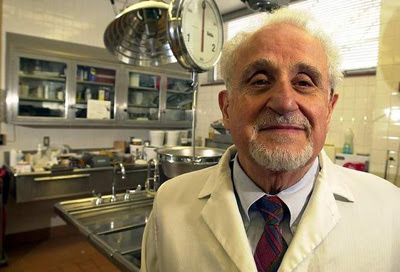

Dr. Federic Zugiba


Two Australians, journalist Mike Willesee and lawyer Ron Tesoriero, witnessed these tests. Knowing where sample had come from, they were dumbfounded by Dr. Zugiba’s testimony. Mike Willesee asked the scientist how long the white blood cells would have remained alive if they had come from a piece of human tissue, which had been kept in water. They would have ceased to exist in a matter of minutes, Dr. Zugiba replied. The journalist then told the doctor that the source of the sample had first been kept in ordinary water for a month and then for another three years in a container of distilled water; only then had the sample been taken for analysis. Dr. Zugiba’s was at a loss to account for this fact. There was no way of explaining it scientifically, he stated. Only then did Mike Willesee inform Dr. Zugiba that the analyzed sample came from a consecrated Host (white, unleavened bread) that had mysteriously turned into bloody human flesh. Amazed by this information, Dr. Zugiba replied, “How and why a consecrated Host would change its character and become living human flesh and blood will remain an inexplicable mystery to science—a mystery totally beyond her competence.”

Only faith in the extraordinary action of a God provides the reasonable answer—faith in a God, who wants to make us aware that He is truly present in the mystery of the Eucharist.

The Eucharistic miracle in Buenos Aires is an extraordinary sign attested to by science. Through it Jesus desires to arouse in us a lively faith in His real presence in the Eucharist. He reminds us that His presence is real, and not symbolic. Only with the eyes of faith do we see Him under appearance of the consecrated bread and wine. We do not see Him with our bodily eyes, since He is present in His glorified humanity. In the Eucharist Jesus sees and loves us and desires to save us.

In collaboration with Ron Tesoriero, Mike Willesee, one of Australia’s best-known journalists (he converted to Catholicism after working on the documents of another Eucharistic miracle) wrote a book entitled Reason to Believe. In it they present documented facts of Eucharistic miracles and other signs calling people to faith in Christ who abides and teaches in the Catholic Church. They have also made a documentary film on the Eucharist—based largely on the scientific discoveries associated with the miraculous Host in Buenos Aires. Their aim was to give a clear presentation of the Catholic Church’s teaching on the subject of the Eucharist. They screened the film in numerous Australian cities. The showing at Adelaide drew a crowd of two thousand viewers. During the commentary and question period that followed a visibly moved man stood up announcing that he was blind. Having learned that this was an exceptional film, he had very much wanted to see it. Just before the screening, he prayed fervently to Jesus for the grace to see the film. At once his sight was restored to him, but only for the thirty-minute duration of the film. Upon its conclusion, he again lost the ability to see. He confirmed this by describing in minute detail certain scenes of the film. It was an incredible event that moved those present to the core of their being.

‘I am the living bread come down from heaven. Whoever eats this bread will live forever and the bread that I will give for the life of the world is my flesh’ (John 6:51)


Sunday, June 4, 2023

Feast of the Holy Trinity (Gospel: John 3:16-18)


One thing that all of us have in common, is the search for happiness. Everyone wants to find happiness. We may have very different ideas as to what happiness is, but all of us are searching for it. God shows us exactly where to find it and how to get there, but we are not always convinced. One of the consequences of Original Sin, was that we were no longer in communion with God the way He intended for us. It’s says right after the Fall, that Adam and Eve hid from God. They had not done that before. They were suddenly afraid of him. And this has passed on to us. We are not always convinced that what God teaches us is true, that He really has our best interests at heart. If we were, we would try and live his commandments as carefully as possible, since they are the path to our happiness.


If I asked how many of you here want to be rich, probably everyone would say yes, because we are convinced that we will have happiness if we have enough money. Our problems will go away, but they won’t. In fact, Jesus says ‘How hard it is for a rich person to enter the kingdom of heaven.’ Why would it be harder to enter heaven if you are rich? Because our wealth can be a distraction. We can become immersed in material things, forgetting about what is truly important and it doesn’t have to be great wealth either. Being obsessed with getting enough money is just as bad, but Jesus taught the opposite. He said, ‘It is easier for a camel to pass through the eye of a needle, than for a rich person to enter the kingdom of heaven.’ (Luke 18:25; John 3:3).  The ‘eye of a needle’ was a metaphor for a very narrow opening. The kingdom of heaven is where we will find happiness and ironically wealth often becomes an obstacle to it, because it distracts us from what is really important. Instead of spending our life growing closer to God, we are focused on material wealth and forget about him. Just recently a man told me that he realized he had spent his whole life working hard to make enough money, but in the process he alienated himself from his family. He realized he would have been far better off to earn less and spend more time with his family.


Many times I have heard people who have worked in third world countries say, that it is always in the poorest countries that people have the greatest joy, even where there is terrible injustice. It is in first world countries where you will find the greatest anger, depression and despair. Why is that? Because in the poorest countries they are not distracted by wealth and they realize that they will only find happiness in God, beginning in this life and fulfilled in the next.


When Our Lady appeared to St. Bernadette in Lourdes in 1858, she said to her ‘I cannot promise you happiness in this life, but in the next.’ If we understand this, we will begin to find peace, because we won’t be expecting to find complete happiness here. We will only have complete fulfillment in the world to come, because we will only find our fulfillment in God.


The wonderful thing is that God has created us for happiness. The Holy Trinity was perfectly fulfilled in every way before He created us, but God wanted to share that happiness. So, God created us to be able to share in his happiness and total fulfillment, which we will experience, if we remain open to God. Think of times in your life when you were happy: birthdays, weddings, the birth of a child, graduations. Our instinct is to share it, to celebrate it with others. So we invite others to share in our happiness and we have a party. That is why God created us, because He wanted us to share in his happiness and that is what awaits us unless we reject it. Why would someone reject it? Because we think we know better and refuse to listen to what God teaches us and commands us to do. The death and resurrection of Jesus reopened the possibility of heaven, which we had lost because of Original Sin. Now it is offered to us, but we still have to choose it.


How is it that nearly all of us want peace and happiness, but our world is full of war and hatred? We want equality, but we are continually faced with discrimination. The reason is because there is a war going on that we cannot see, but it is mentioned many times in Scripture. Satan rejected God and hates us, because we are God’s creation. He wants to take everything away from God, especially us, his children, purely out of hatred for God. The only reason Satan takes any interest in us, is to get at God.


In the book of Genesis, after the fall of Adam and Eve, God said,

I will put enmity between you [Satan] and the woman, and between your seed and her seed. She will crush your head, and you will strike her heel (Gen 3:15).

It says in the book of Revelation:

And the dragon was enraged at the woman and went to make war with the rest of her children, who keep the commandments of God and hold to the testimony of Jesus.’ (Rev 12:17).


The woman is Our Lady, the Mother of all God’s children. At the crucifixion, Jesus said to saint John—who is the model disciple and represents all of us who follow God— ‘Behold your mother.’ And to Mary, ‘Behold your son.’ (John 19:25). He gave us his mother as our heavenly mother. That is why she has continued to appear many times throughout the world, because she cares about her children and wants to make sure we remain on the right path. The very fact that she has appeared at all means that we have strayed from the right path and we are putting ourselves in danger.


If you think of evil people in the world. If they want to cause pain to someone, they will try and harm whatever is dearest to them. What is abortion, except that? Satan destroys God’s children from their beginning. That is what is behind abortion. Satan has convinced us that it is a good thing, so that we needn’t be inconvenienced. But think of the words of consecration at the mass: ‘This is my Body, which will be given up for you.’ Think of what abortion says: ‘This is my body and it will not be given up for you.’ It is the opposite of the mass. That’s how you know what is behind it. There is no species on the planet that kills its own young.


So we are in the middle of a war, a spiritual war, where Satan wants to take us away from God in any way possible. St. Paul puts it this way:

For we are not fighting against flesh-and-blood enemies, but against evil rulers and authorities of the unseen world, against mighty powers in this dark world, and against evil spirits in the heavenly places (Eph 6:12).


How did he know that? Because Jesus taught them all these things. I have no doubt that between the time of the resurrection and the ascension into heaven, these were some of the things that God was teaching the Apostles. He was piecing it all together for them. That is why God inspired them to write it down and why we have it in the Scriptures, the word of God.


What is the casting out of demons, except taking back God’s children? How do you destroy an enemy? Divide and conquer: turn them against each other. Look at what is happening in our world right now. We are turned against each other and killing each other, often for no particular reason. This is because we are in the middle of a much bigger war than we can see, when people turn their back on God and on God’s teachings, they lose their way and are open to every kind of suggestion.


But as always, God gives us all the tools we need to fight back. He shows us that living the Commandments and the teachings of Christ is what keeps us safe. If we listen to what God says to us, then we will not get distracted from the path to our happiness. If we live by the word of God, then we will remember what is important and we will see through the lies that we are constantly being told: ‘Abortion and Euthanasia are good for society. You should be able to do whatever you want.’ That was the lie told to Adam and Eve, which they fell for. ‘You don’t need to listen to God.’ Notice in the Gospel where Jesus said to the Apostles, ‘Go therefore, and make disciples of all nations… teaching them to observe all I have commanded you.’


God has created us to share in his happiness, but He will not force us to accept it. I’m often amazed at the amount of parents who tell me in great distress about one of their children who has rejected them. They cannot understand why. They did everything they could for their children and then their children turned their back on them. Sadly, it happens quite often. We can also do this with God. God offers us everything and gives us everything, but we can still reject him and people do.


I think that must have been one of the most difficult sufferings in the life of Jesus, knowing that some people would still reject him, in spite of the terrible sufferings He was going to go through. His death and resurrection re-opened the way to heaven for us, but we can still reject it.

God so loved the world that He gave his only Son,

So that all who believe in him might not perish,

but might have eternal life (John 3:16).


Friday, May 26, 2023

Pentecost Sunday (Gospel: 20:19-23 ) The renewal of the Church


In 1999, in preparation for the millennial celebrations, Pope John Paul II invited representatives from 54 different groups around the world to come to Rome. These groups were all started over the previous several decades by lay people, under the inspiration of the Holy Spirit. To give you an example, some of the groups were, the Focolare movement, Marriage Encounter, Cenacolo, Charismatic Renewal. All of these different movements within the Church are really about different ways of living out the Gospel in daily life. These movements have been so successful that most of them have spread all over the world. In Rome there were 400 000 people present representing these 54 different movements. This event was a real celebration of what God is doing all over the world. 


In my hometown of Galway in 1988, a prayer group sprang up which was to bring many young people back to their faith, including me. Today there are 4 people in religious life from that group (two priests and two sisters in the Poor Clares) and many married couples who are really living the Gospel and teaching their children to do the same.  A friend of mine from that prayer group, who was one of the first people to welcome me to it, started a school of evangelisation for lay people in Knock in 2006. They had 17 students all eager to learn how to pass on the faith. While that prayer group is no longer there, two other groups came from it and the same thing is happening. 


All of these groups were started because God inspired people to act. The Holy Spirit moved people to act and they did. All of those groups were started by lay people.


We don’t often hear about these things, because they don’t make the headlines, but I think it is important for us to know that these things are going on all the time.  From what you read on the news you would be forgiven for thinking that the Church is on its way out, or that religion is no longer relevant. Nothing could be further from the truth and times of crisis, such as we are in now, often make people think about God and why we are here.


Although I never stopped believing in God, I stopped practicing my faith for a time, while I was in my teens. I found it harder and harder to relate to what was going on at mass. When I was 19 I found myself thinking that I wanted to be properly in or out, but not half way. That same year I came to the US and worked on Long Island for the summer as a student, in the A&P supermarket. It was a great adventure.


When I got home I came across a book which had been left in my bedroom called, Power for Living. I don’t know who put it there. This book was a series of testimonies of different well-known people, talking about their faith and how they came to know God. At the end of the book it said, ‘If you want to have God in your life, sit down now and ask him to come into your life.’ And so I did. I remember sitting on my bed and saying, ‘Lord, if you are really there, help me to know you.’ Little did I know what was coming next.


A few weeks later I was talking to a friend of mine by the name of Aidan. Aidan told me that he had met a mutual friend of ours called Louise when he was travelling on a bus. He said she had become ‘all religious and holy.’ She had been on pilgrimage to Medjugorje—the place in Bosnia-Herzegovina, where Our Lady had allegedly been appearing to six young people. While she was there she had had an awakening of her faith and was now filled with zeal and wanted to share it with anyone who would listen. I was intrigued by this, as I knew Louise, who was from a similar background to myself. So I called to her house and asked her what had happened. She was surprised that I asked her so directly, as she had been trying to find ways to bring this up in conversation, but I asked her before she could say anything. For the next hour and a half she told me all that had happened her and how God had revealed himself to her while she was there. At the end of it she asked me if I would like to come to a prayer meeting the next week. I wasn’t too keen on the idea, but Louise was clever and she asked another girl whom I had a crush on, to invite me. Naturally I went. Now they are both married and I’m a priest!


When I went to the prayer meeting I found myself in the middle of about 50 young people, who sang hymns, prayed the rosary, shared some Scripture readings, praised God out loud and called on the Holy Spirit. I had never come across anything like this before, but I could see what these people had was real and I wanted it. So I began to attend this group each week and they taught me about the importance of spending some time each day in prayer and so I did.


A few weeks later they started what is called a ‘Life in the Spirit Seminar’. This is a series of teachings over eight weeks, which teaches people about the reality of the Holy Spirit and the power of God in your life, how it is real and not just a religious idea. On the fifth week they pray with everyone, laying on hands as the Apostles did, praying that people might receive an out-pouring of the Holy Spirit. I was excited about what might happen, but when I was prayed with nothing in particular happened, except that I felt peaceful, though not unduly so.


However, over the following days and weeks I found that I had a burning desire to pray, such as I had never experienced before. I was in college at the time, studying marketing and I constantly wanted to go away by myself to pray. I also found that I began to hear the Scriptures as if I had never read them before and the words of the mass were suddenly alive as if I had never heard them before. Everything was different. The Holy Spirit had powered up my faith. From then on my faith was completely different, alive and on fire as it had never been before. That has stayed with me to this day.


About three years later I began to feel a call to become a priest and so I began my studies to for the priesthood and then I was ordained when I was 29. People sometimes ask why I didn’t want to get married. I was drawn to get married and I knew giving that up wouldn’t be easy, but the calling to serve God as a priest was stronger and hard to resist. It has not been an easy journey, but the Lord said it wouldn’t be easy. ‘You will be hated by all men on account of my name,’ but I couldn’t imagine a greater privilege. It is a mind-blowing idea, that through my hands as a priest, a piece of bread is transformed into the Body and Blood of Christ and when I say the words of absolution, a person’s sins are taken away. I cannot imagine a greater privilege than this.


A few times I have gotten to the point where I didn’t think I could go on, not because I wanted to give up, but because I was really struggling and felt it was too much. But each time God has called me back and given me the grace to keep going. I know that is also because many people continually pray for me and other priests.


The first disciples had nothing to rely on except the power of God and that is why the Lord was able to do so much through them. They didn’t have any prestige, or titles. Nobody knew who they were. They had to rely completely on the power of God’s Spirit and they did.  Jesus had taught them to do this. He told them that they would receive the gift of the Spirit, which is what we celebrate this weekend and they were instantly changed from being frightened men in hiding, to unstoppable men, to the point of giving up their lives. This is the same gift that I received, though I suspect they received it in a more intense way.


The power of the Holy Spirit is what makes our faith alive. Without the Holy Spirit our faith is nothing. The very desire we have to know God comes from the Holy Spirit. The Scriptures would be just ancient writings, except that the Spirit sets them on fire. The bread and wine at each mass would remain just bread and wine, except that the Spirit transforms them into the Body and Blood of Christ, not just symbolically, but really and truly into the Body and Blood of Jesus. The reason why the Church is still here after 2000 years, is because the Holy Spirit continues to move and inspire people to act. No one is excluded, but it requires an openness on our part, because God will never force anything on us.


If you find your faith is not terribly alive, or it doesn’t seem very interesting, it means that you need to pray for the gift of the Spirit. God wants to give us the gift of his Spirit and is just waiting for us to ask. So ask!


‘Come Holy Spirit and renew the face of the earth.’


Friday, May 12, 2023

6th Sunday Yr A (Gospel: John 14:15-21) If you love me you will keep my commandments


Something I often come across as a priest is this: when someone has died, or someone has become very ill, it often makes people angry, because they feel that God has let them down, or even betrayed them. Working in a hospital for a few years I would often hear people say: ‘I never hurt anyone. Why has God done this to me?’ ‘God owes me.’ It is as if there was a legal contract and if we keep our side of it, then God is obligated to keep his side of it, by looking after us and making sure that nothing happens to us. This is also one of the effects of Original Sin. We are suspicious of God and not convinced that He is good. We are quick to blame God when things go wrong and only to thank and praise him for the things that suit us.


The problem is that there is no love in this way of thinking. There is no love in a legal contract. It is just a contract, on paper, or by word of mouth. However, there is one big difference with the way God works. God relates to us on the basis of love alone. Everything that we have is a gift from God, out of love. We do not deserve any of it and we have not earned any of it. God does not owe us anything and will never owe us anything. If I manage to be faithful to my priesthood and to all that the Lord Jesus asks me to do as a Christian, then when I die, I cannot demand eternal happiness from him. He does not owe me anything. It is his undeserved gift, for no reason except that He wants to give it to me, just as we gifts to people we love, for no other reason than that we love them. That is why whatever we do on this earth for the Lord, is supposed to be done out of love for him and because he asks us to do it. Our relationship with God is meant to be one of love.


Look at the first words of the Gospel: ‘If you love me, you will keep my commandments.’ ‘If you love me…’ What would you do for someone you love? Would you keep their wishes? Would you respect them? Would you keep their commandments, God’s Commandments?


It is interesting how many people have the idea that you should follow all the demands of your faith ‘in so far as they suit you’. If it doesn’t suit you then obviously you don’t do it. That is the mentality of our world and it is a selfish mentality. We are constantly told that we don’t owe anything to anyone and we shouldn’t have to do anything unless it suits us. What do I get out of it?


When you hear someone say that mass is boring, it really means they feel that they should get something out of it. It is about their satisfaction. But it’s not. Coming to mass each Sunday is about us making a sacrifice of our time to worship and acknowledge God, because He is God. No other reason is needed.


I have rarely heard people say they were bored at a funeral. That’s because they know why they are there.


The idea of sacrifice is not part of the thinking of our world. Jesus does not tell us to follow him on our own terms, but on his terms. In other words, we must try to live as He asks. They are commandments and not suggestions. ‘If you love me, you will keep my commandments.’


However, we must also remember that anything God tells us to do, is for our benefit. God knows exactly how we work and also what will help us to grow and blossom. He knows the path we need to follow, which will lead us to happiness. So, He points out the way and tells us how we need to live. ‘If you live as I command you, you will be alright.’ Unfortunately we do not always trust God and we often think that we know better. That is also why they are commandments and not suggestions. God is well aware that we often think we know better, so He tells us which path is the one to take. For our part we must trust him, even when it does not seem to make sense to us.


Our faith can certainly be demanding, but any way of life worth living is demanding.  If I wish to be a Catholic and to follow the way of Jesus Christ, then this is what is expected of me. These are the demands of our faith, but while it is demanding, it is not beyond us, because God gives us the strength we need to live it. He gives us ‘The Advocate,’ the Holy Spirit, to give us both strength and understanding. The Spirit empowers us to live as God asks us to. Think of the Apostles when they received the Spirit. They were completely transformed and the Spirit took away all their fear. From then on they were able to preach with power and authority, because God had given them the strength they needed.


It says in the Acts of the Apostles that the Apostles continually prayed with people so that they would receive the gifts of the Spirit, what we call Confirmation. The Lord gives us everything we need to live as He asks, so we can never say that it was too much for us. Not only that, but the Lord comes to us himself in the Eucharist, to accompany us every step of the way. So we are not walking this journey on our own. Jesus is with us for as much as we allow him to be.


Jesus also says that the Spirit is ‘The Spirit of truth, whom the world cannot accept.’ At this time in particular we need that truth, because it has become so distorted. How do we know what really is true? Ask the Spirit. Pray to the Spirit. God speaks to us through his Spirit, through his words and through his Church. If you are confused about what really is right and wrong regarding all the crazy teachings we are hearing about, read the Scriptures and pray to the Spirit. Jesus says, ‘He will teach you everything.’


The farther people stray from God, the more confused they get, until they no longer know what is right and wrong. But we are blessed, because all we have to do is read the Scriptures and listen to the Spirit teaching us through his Church. That way we are not dependent on any one person, or their interpretation of Scripture. ‘The Spirit of truth will teach you everything.’


Something I’m also asked a lot is how we are supposed to pass on our faith to the next generation. The second reading addresses this perfectly. ‘Always be ready to give an explanation to anyone for the hope that you have, but do it with gentleness and reverence.’ The best way to pass on our faith is to live it as well as we can. The crazier our world gets, the more people are trying to find meaning. When we live our faith seriously, it makes us different and people notice that. They may not say it to you, but people l do notice. One thing that people notice is that we have a sense of purpose and that we are not overcome by the craziness of our world at this time, because we know where to keep our focus and that is on the Lord. We are already seeing signs of this happening. I have noticed more younger people coming to Church, because they are searching. If people ask you why you believe what you do, or why you are not overwhelmed by what is happening, then you have the chance to ‘Give a reason for the hope you have.’ But for the most part, we just live this relationship with God.


In the early Church, people were drawn to the Christians because of the values and purpose they had. They were also living in a time of craziness, but they bore witness by the faith they had.


Remember too that God is as interested in your children’s faith and wellbeing as you are. You created their bodies. God created their souls. Don’t underestimate how much God is working in their lives, even though you may not see it. Just keep praying for them and doing penance for them and offer all that you suffer, for them.


‘Always be ready to give an explanation to anyone for the hope that you have, but do it with gentleness and reverence.’


‘If you love me you will keep my commandments.’


Saturday, May 6, 2023

5th Sunday of Easter, Year A (Gospel: John 14:1-12) Life after death


This Gospel passage is one that I nearly always read at funerals. To me it perfectly sums up so much of what we believe happens at death. So often we think of this life as being everything and when it’s over, we go to some kind of spiritual retirement home, where we ‘rest in peace’. In some ways that is to see it the backwards. Our society tells us that this life is everything, so enjoy it all you can and try and gain as much pleasure and satisfaction as you can, before it’s over. The Lord tells us that this life is a time of getting ready for the world to come, which is what we are created for. This is our time of learning about love and service and about God. It is also our time of free will when we must choose to accept or reject God. When our time on earth is complete, the Lord will take us to be with him forever, unless we have rejected him.


‘I am going to prepare a place for you…’ There is a place waiting for us.

‘I will come and take you to myself, so that where I am, you also may be.’


When our time on earth is complete, the Lord will come for us. Even just to put it that way, as opposed to saying, ‘when our life is over,’ makes a big difference. Our life isn’t over, just our time on earth. Our mortal bodies will die, but then we will have glorified or spiritual bodies and we will no longer be bound by time and space and where we will live more intensely than we do here on earth. We will experience everything just as we do now, but at a higher level of intensity than we do now.


The most difficult thing anyone can face is the death of a child, or someone dying much younger that we feel they should die, through violence, or cancer, or anything else. Why does God allow this to happen? We don’t know. But if we can go back to seeing our time on earth as the time of preparation for the world to come, then it means that those we have lost have gone ahead of us sooner than we expected. Their time on earth was completed sooner than we expected, but sooner or later we will catch up with them again. That is the hope that our faith gives us and there is really no greater hope than this.


If our life on earth was everything, then the death of those we love is the worst disaster imaginable. But if our time on earth is only temporary and leading to something else, then that changes everything. Sooner or later we will catch up with those who have gone before us.


St. Paul writes, ‘If our faith in Christ has been for this life only, then of all people we are the most to be pitied’ (1 Cor 15:19). The whole point of our faith is what it is leading us to.


So what is the purpose of our time on earth? We were created to share in God’s happiness. When we are very happy about something, our instinct is to share it with people. We have a party to celebrate happy events, because we want others to share in our joy. God created us to share in his happiness. After giving our first parents this happiness, which is explained through the story of the Garden of Eden, we lost it, which was not what God wanted for us. So God won it back for us through the death and resurrection of Jesus. Now it is offered to us again, but we must consciously choose it.


Our time on earth is that time of choosing for God or against God; choosing to love or not to love. We are created to love and serve God and to share in his happiness. Our time on earth is meant to be a time of service, to God and the people around us. It is meant to be a time of giving of ourselves, sacrificing ourselves, for the people around us, just as Jesus did.


In St. John’s Gospel, at the last supper, it says that Jesus washed the feet of the Apostles and then He said to them: ‘You call me Teacher and Lord and rightly, for so I am. If I your Lord and teacher have washed your feet, you also should wash one another’s feet.’ (John 13:13-14)


In other words, we are meant to serve and sacrifice of ourselves. It is easy to forget that when we are constantly being told that everything is about our own fulfillment. It is not just about our own fulfilment, although in fact the more we give of ourselves, the more we will be satisfied.


Does it really matter what we do, since God loves everyone and everyone goes to heaven? That is not what Jesus taught. Many times Jesus taught that we must be careful how we live, because it will determine what happens to us after death. We choose for or against God by the way we live. God has created us to be with him in heaven, but it is not a given. It depends on how we live and what we choose.


In Matthew 25, Jesus gives the parable of the sheep and the goats, explaining this:

31 “When the Son of Man comes in his glory, and all the angels with him, he will sit on his glorious throne. 32 All the nations will be gathered before him, and he will separate the people one from another as a shepherd separates the sheep from the goats. 33 He will put the sheep on his right and the goats on his left.

34 “Then the King will say to those on his right, ‘Come, you who are blessed by my Father; take your inheritance, the kingdom prepared for you since the creation of the world. 35 For I was hungry and you gave me something to eat, I was thirsty and you gave me something to drink, I was a stranger and you invited me in, 36 I needed clothes and you clothed me, I was sick and you looked after me, I was in prison and you came to visit me.’

37 “Then the righteous will answer him, ‘Lord, when did we see you hungry and feed you, or thirsty and give you something to drink? 38 When did we see you a stranger and invite you in, or needing clothes and clothe you? 39 When did we see you sick or in prison and go to visit you?’

40 “The King will reply, ‘Truly I tell you, whatever you did for one of the least of these brothers and sisters of mine, you did for me.’

41 “Then he will say to those on his left, ‘Depart from me, you who are cursed, into the eternal fire prepared for the devil and his angels. 42 For I was hungry and you gave me nothing to eat, I was thirsty and you gave me nothing to drink, 43 I was a stranger and you did not invite me in, I needed clothes and you did not clothe me, I was sick and in prison and you did not look after me.’

44 “They also will answer, ‘Lord, when did we see you hungry or thirsty or a stranger or needing clothes or sick or in prison, and did not help you?’

45 “He will reply, ‘Truly I tell you, whatever you did not do for one of the least of these, you did not do for me.’

46 “Then they will go away to eternal punishment, but the righteous to eternal life.”


Many people scoff at the idea of hell, or say that a loving God would never create hell. But if heaven is real and we have free will, then it must be possible to not go to heaven. Otherwise we would be forced to go to heaven, which contradicts the idea of free will. So if heaven is beauty, joy, peace, light, happiness, love and the total fulfillment we all long for, then to reject that would be to be left with the opposite: ugliness, hatred, darkness, pain, isolation and the eternal frustration of never having the fulfillment we long for. It is not that God sends people to hell, rather that people choose hell by rejecting God.


It is interesting that any place where apparitions of Jesus or Mary have occurred, the visionaries have nearly always been shown heaven, hell and purgatory, to remind us that these are real.


The various trials that we continually go through are also part of this journey to heaven. Every trial we go through gives us the opportunity to grow. When things go wrong we can curse God, or ask God to help us. Every struggle we go through helps to form us as people, one way or the other. When you think you are going crazy and can’t take any more, try and remember that no matter how bad things get here, it is temporary. Sooner or later our time here will be complete and then, God willing, we will go to be with our loved ones once again, where we will experience the fulfillment that we all long for.


I want to finish with the following quotation from a famous Protestant minister called John Owen. When he was dying he was dictating some letters. He said, ‘Write, “I am still in the land of the living”, and then he said, “No, change that. Write, “I am still in the land of those who die. Soon I hope to be in the land of the living.”’